✨ This article was AI edited. Editorial responsibility: MissJ.eu.
Produced with AI. This article was artificially generated. Editorial responsibility: MissJ.eu.
During Halloween, school carnivals, theatrical productions, and festivals, children and adults alike frequently look for quick face painting solutions at home. When cosmetic face paints are not on hand, a common question arises: can we use poster colours on face?
The clear, medical consensus is no, you should never use poster colours on your face or skin. While poster paints are generally labeled “non-toxic” for classroom paper crafts, non-toxic does not mean dermatologically cosmetic-grade or safe for transdermal contact. In this health and safety guide, we break down the chemical formulation of poster paints, the severe dermatological risks of applying craft paint to facial skin, emergency removal protocols, and certified skin-safe alternatives.
“Non-Toxic” vs “Cosmetic Grade”: Understanding the Difference
Many parents assume that because a box of student poster paints carries an ASTM D-4236 “non-toxic” label, it is harmless on skin. This is a dangerous misconception:
| Standard / Grade | Testing Authority | Skin Safety Guarantee | Intended Substrate |
|---|---|---|---|
| Craft / Poster Paint (ASTM D-4236) | Art & Creative Materials Institute (ACMI) | ❌ Zero skin safety testing (Only tests for acute ingestion poisoning) | Paper, cardboard, canvas, poster board |
| Cosmetic Face Paint (FDA / EU Annex IV) | US FDA / EU Cosmetics Regulation (EC 1223/2009) | ✔ 100% certified dermatologically safe for prolonged skin and eye contact | Human facial skin, body, and lips |
Top 4 Dermatological Dangers of Poster Colours on Face
1. Contact Dermatitis and Chemical Irritation
Poster colours contain industrial preservatives (such as isothiazolinones and formaldehyde-releasing agents) to prevent mold growth in liquid jars. When applied to delicate facial skin, these biocide chemicals penetrate the lipid barrier, triggering severe allergic contact dermatitis characterized by intense burning, erythema (redness), hives, and blistering.
2. Industrial Heavy Metal Pigments
Unlike cosmetic colorants which use pharmaceutical-grade iron oxides and titanium dioxide, craft poster paints may utilize cheaper industrial pigments. Certain reds, greens, and blues contain traces of nickel, cobalt, or synthetic azo dyes that can trigger lifelong heavy metal skin sensitivities.
3. Skin Suffocation and Micro-Tears During Drying
As poster paint dries on skin, the gum arabic or synthetic binder contracts aggressively. This tightens the skin, clogs pores, and forms a brittle, chalky mask. When facial muscles move (smiling, talking), the paint cracks and pulls microscopic outer layers of stratum corneum skin, leaving micro-fissures prone to bacterial infection.
4. Eye Irritation & Cornea Damage
Dried poster paint flaking off near the eyebrows or eyelids can enter the eye. The abrasive, unrefined mineral pigment particles can scratch the cornea, causing chemical conjunctivitis and excruciating eye pain.
What to Do If Poster Paint is Already on Someone’s Face
- Do Not Scrub with Soap: Aggressive scrubbing with harsh soap and water will drive abrasive paint particles deeper into pores and aggravate irritated skin.
- Dissolve with Oil: Apply a generous layer of gentle plant oil (coconut oil, mineral baby oil, or micellar cleansing water) over the paint. Let the oil sit for 2 to 3 minutes to soften the binders.
- Wipe Gently with Soft Microfiber: Use a warm, damp microfiber cloth or cotton pad to wipe the dissolved pigment away in smooth, gentle strokes.
- Soothe the Skin: Rinse with lukewarm water and apply pure aloe vera gel or a gentle hypoallergenic ceramide moisturizer to repair the skin barrier.
Certified Safe Face Painting Alternatives
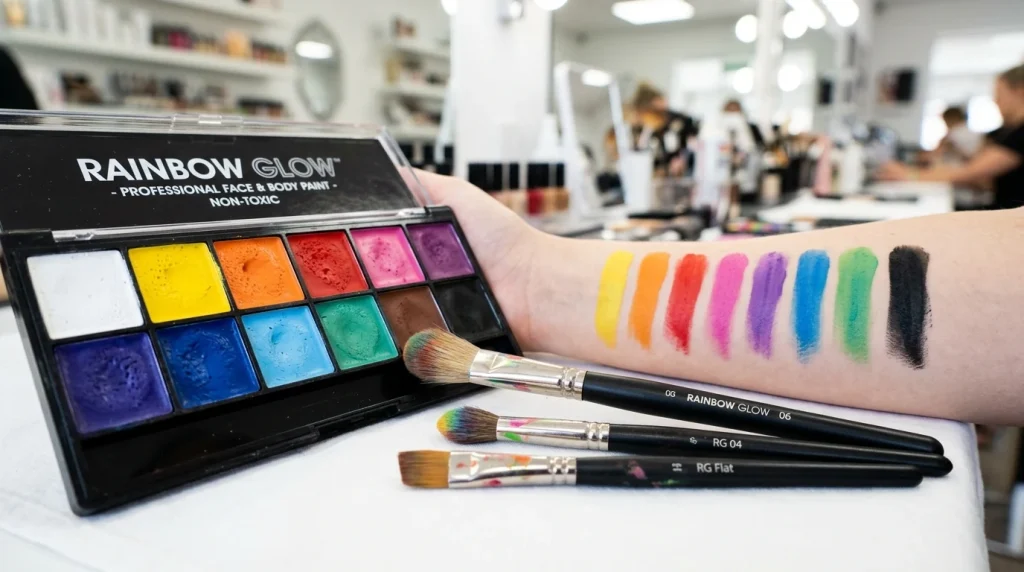
- Water-Activated Face Paints (Snazaroo, Mehron Paradise, Fusion Body Art): Glycerin-based, FDA-compliant paints that wash off effortlessly with mild soap and warm water.
- Cosmetic Makeup & Lip Liners: Everyday cream eyeshadows, colored eyeliners, and long-wear lipsticks can be used creatively for quick facial designs with complete dermatological safety.
- DIY Kitchen Face Paint: Mix 1 tablespoon of gentle baby lotion or cornstarch with a few drops of natural water-based food coloring for a temporary, 100% edible and skin-safe alternative.
Frequently Asked Questions
Is poster paint safe on hands or arms?
While the skin on hands and arms is slightly thicker than facial skin, poster paint can still cause contact dermatitis, itching, and dye staining. It should be washed off immediately and avoided on broken skin.
Is tempera paint the same as poster paint?
Yes, student tempera paint and poster paint share almost identical water-based binder formulations and industrial preservatives. Neither is safe for facial skin application.
Can watercolor paint be used on the face?
Standard artist watercolor pans contain ox gall, unrefined pigments, and binder agents that are not formulated for skin. Use only specialized cosmetic watercolor cakes designed for body art.
Comprehensive Face Paint Ingredient Safety Checklist
When selecting safe, non-toxic products for facial application, look for these safe cosmetic-grade ingredients while strictly avoiding industrial craft chemicals:
| Ingredient Class | Safe Cosmetic-Grade Compounds | Harmful Craft / Poster Compounds |
|---|---|---|
| Coloring Pigments | FDA D&C / FD&C certified color lakes, Iron Oxides (CI 77491/77492), Titanium Dioxide | Unrefined industrial azo dyes, heavy metal impurities (lead, cadmium, nickel) |
| Binders & Bases | Plant glycerin, pharmaceutical beeswax, purified acacia senegal gum | Synthetic polyvinyl acetate (PVA), industrial glue resins, acrylic polymer emulsions |
| Preservatives | Cosmetic phenoxyethanol, potassium sorbate, sodium benzoate | Methylisothiazolinone (MIT), formaldehyde-releasing biocides |
How to Conduct a 24-Hour Skin Patch Test
Before applying any new face paint product (even certified cosmetic brands):
- Apply a quarter-sized dab of the face paint onto the sensitive inner forearm or crook of the elbow.
- Allow it to dry and leave it undisturbed for 24 hours.
- Inspect the area for any sign of redness, itching, swelling, or rash. If any irritation occurs, wash off immediately and do not use on the face.
Get our latest guides, news, and insights highlighted in your Google Search & AI Overviews.