✨ This article was AI edited. Editorial responsibility: MissJ.eu.
Produced with AI. This article was artificially generated. Editorial responsibility: MissJ.eu.
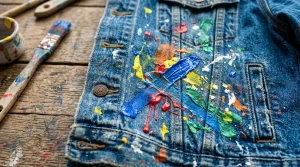
Acrylic on clothes refers to the transfer of water-based polymethyl methacrylate emulsion polymer onto textile fibers. While completely soluble when wet, dried acrylic paint cross-links into an insoluble plastic matrix that bonds to synthetic and natural weaves, requiring isopropyl alcohol, acetone, or enzymatic surfactants to break the polymer bonds without compromising fabric integrity.
Whether you are personalizing wearable art, hand-painting denim jackets, or crafting jewelry display fabrics in your studio, accidental acrylic paint transfer is an occupational hazard. When liquid acrylic touches cotton, linen, silk, or polyester, the immediate physical reaction is capillary absorption into the yarn twists. As the water and volatile coalescing solvents evaporate, the acrylic resin particles fuse together into a permanent, flexible plastic sheet. Knowing the exact chemical properties of acrylic emulsions allows you to systematically dissolve this plastic bond without dissolving your garments.
Wet Acrylic vs. Dried Acrylic: The Chemical Difference
The method you employ depends strictly on whether the paint film is in its open emulsion phase or has achieved full polymer coalescence. In the open phase, water molecules hold the acrylic polymer droplets in suspension. Once water departs, those droplets deform and cross-link, establishing irreversible mechanical anchorage inside the textile weave.
| Stage | Physical State | Solvent Solubility | Primary Treatment Agent | Success Rate |
|---|---|---|---|---|
| Fresh / Wet (< 20 min) | Uncoalesced aqueous emulsion | Water-soluble | Warm water + dishwashing liquid | 98% |
| Skin Dry (20–60 min) | Surface film formed; wet core | Partially polar soluble | 70% Isopropyl alcohol + soft brush | 85% |
| Fully Cured (> 24 hrs) | Cross-linked PMMA plastic polymer | Insoluble in water; swellable in alcohol | 91%+ Isopropyl alcohol or Acetone | 70%–80% |
Method 1: Treating Fresh, Wet Acrylic Stains Immediately
If the acrylic paint is still wet or tacky, speed is your greatest asset. Do not rub the fabric vigorously across the surface, as friction drives the wet emulsion deeper into the weave core.
- Scrape excess volume: Use a dull butter knife, palette knife, or metal spoon to lift away excess paint from the surface in an upward flicking motion.
- Reverse flush with cold water: Turn the garment inside out and run cold running water directly through the reverse side of the stain. Flushing from the back pushes the pigments out of the yarn rather than forcing them deeper into the front face.
- Emulsify with dish soap: Apply a generous drop of concentrated degreasing dish soap directly to the damp fabric. Gently work the soap into the fibers with your fingertips until a colored lather forms.
- Launder immediately: Wash the garment in your washing machine on a standard cycle with heavy-duty liquid detergent. Inspect the area before machine drying; the thermal heat of a clothes dryer will permanently bake any residual acrylic into the weave.
Method 2: Dissolving Dried Acrylic Paint with Isopropyl Alcohol
Once acrylic paint has hardened into solid plastic, soap and water will have zero effect. The molecular bond of polymethyl methacrylate must be swelled and softened by a polar organic solvent. The safest and most effective household solvent is isopropyl alcohol (rubbing alcohol) with a concentration of 91% or higher.
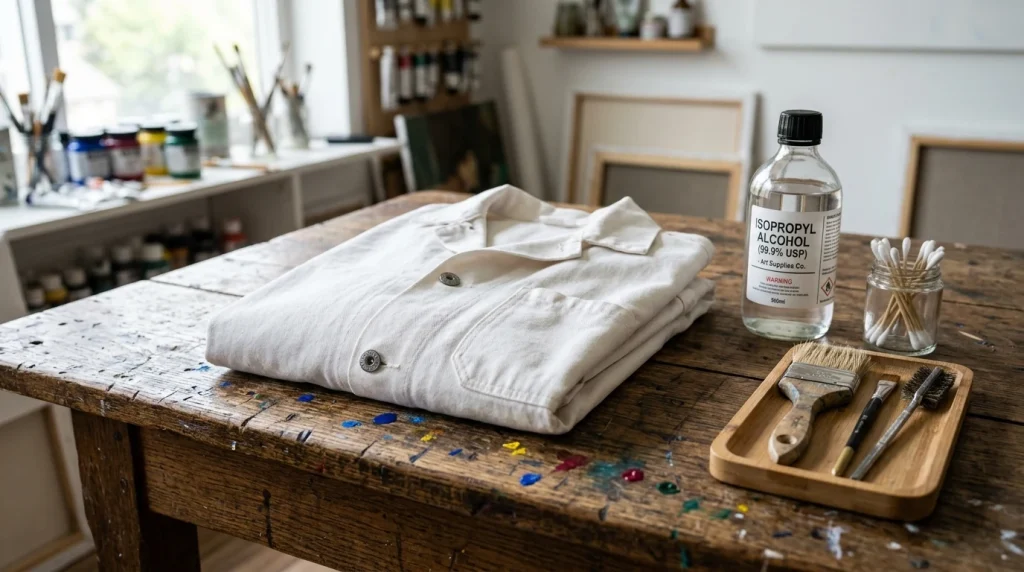
Required Tools & Materials:
- 91% or 99% Isopropyl Alcohol (do not use 70% if high-test is available)
- Clean white microfiber or cotton terry towels
- Soft-bristled toothbrush or nylon detailing brush
- Heavy-duty liquid laundry detergent
- Perform a spot test: Apply a single drop of alcohol to an inconspicuous interior hem. Wait two minutes and blot with a white cloth to verify dye stability.
- Saturate the dried paint: Place an absorbent white towel beneath the stained area to catch dissolved pigment. Pour isopropyl alcohol directly over the dried acrylic until the fabric is completely saturated.
- Mechanical agitation: Allow the alcohol to dwell for 3 to 5 minutes to soften the polymer. Using a soft toothbrush, scrub the paint with small, circular motions. You will see the hardened plastic break down into crumbly paint flakes.
- Blot and lift: Press a clean cloth firmly against the loosened paint to absorb the suspended pigments. Reapply alcohol and repeat until no paint transfers to the cloth.
- Pre-treat and wash: Rub liquid laundry detergent directly into the treated area to disperse lingering solvent residues, then machine wash on cold.
Method 3: Acetone Treatment for Heavy Denim and Unfinished Cotton
For stubborn, heavily crusted acrylic paint on durable materials like 100% cotton denim, artist canvas, or heavy canvas work aprons, pure acetone acts as a stronger solvent than alcohol. Acetone rapidly degrades synthetic binders, converting hardened paint into a soft gel.
Critical Fabric Warning: Never use acetone or nail polish remover on acetate, triacetate, rayon, modacrylic, or spandex blends. Acetone will chemically liquefy and dissolve synthetic acetate fibers instantly, creating permanent holes in the fabric.
Fabric Compatibility Matrix
Before applying any chemical agent, verify your garment’s care tag against this compatibility matrix to prevent permanent fiber degradation:
| Fiber Type | Water & Detergent | Isopropyl Alcohol | Acetone | Ammonia Solution |
|---|---|---|---|---|
| 100% Cotton & Denim | Safe | Safe (Test dye) | Safe | Safe |
| Linen | Safe | Safe | Safe | Safe |
| Polyester & Nylon | Safe | Safe | Use with caution | Safe |
| Wool & Cashmere | Hand wash cold only | Safe (gentle dab) | Avoid (dries fibers) | Avoid (damages keratin) |
| Natural Silk | Hand wash cool | Test hidden seam | Avoid | Avoid |
| Acetate & Rayon Blends | Safe | Safe | STRICTLY FORBIDDEN | Test hidden seam |
Pro Tips for Jewelry Crafters and Textile Artists
When creating wearable textile crafts or custom painted jewelry pieces, incorporating clean studio habits drastically reduces cleanup emergencies:
- Always wear a 100% cotton canvas studio apron. Cotton absorbs accidental drops without allowing paint to soak through to underlying streetwear.
- Keep a squeeze bottle of 91% isopropyl alcohol and clean cotton rags at your workbench station. Spot-treating paint within two minutes eliminates the need for intense scrubbing.
- Learn how specialized textile binders function. If you regularly paint apparel, explore our in-depth guide on using acrylic paint on fabric safely to formulate washable, permanently flexible designs.
- Understand polymer drying phases by reading our technical analysis of acrylic paint drying timelines to identify when paint transitions past water solubility.
Frequently Asked Questions
Does hairspray remove dried acrylic paint from clothing?
Yes, traditional aerosol hairsprays often contain alcohol, which can soften light paint specks. However, modern alcohol-free hairsprays will not work, and hairspray leaves behind sticky styling polymers that require heavy laundering. Using pure 91% isopropyl alcohol is vastly more effective, cheaper, and cleaner.
Can hand sanitizer remove acrylic paint from a shirt?
In an emergency away from your studio, an alcohol-based hand sanitizer containing at least 70% ethyl or isopropyl alcohol can soften fresh or semi-dry paint spots. Apply a dollop, let it sit for two minutes, scrub with a paper towel, and rinse thoroughly with cold water.
Will vinegar take acrylic paint out of clothes?
Distilled white vinegar mixed with equal parts water and a tablespoon of salt can help loosen light, fresh acrylic splatters, but it lacks the solvent strength to dissolve fully cross-linked, hardened acrylic resin. For cured paint, isopropyl alcohol remains the gold standard.
Get our latest guides, news, and insights highlighted in your Google Search & AI Overviews.