✨ This article was AI edited. Editorial responsibility: MissJ.eu.
Produced with AI. This article was artificially generated. Editorial responsibility: MissJ.eu.
Using acrylic on cloth is one of the most accessible, versatile, and enduring DIY fashion and textile art practices. From custom denim embroidery backgrounds and hand-painted linen banners to personalized canvas totes and t-shirt graphics, standard artist acrylics allow creators to achieve vibrant, waterproof textile designs without purchasing costly industrial screen printing setups.
However, successful fabric painting requires mastering the chemistry of polymer bonding. Without proper fiber preparation, correct water-to-paint dilution ratios, and thermal heat setting, acrylic paint can crack upon flexing or wash away in laundry. In this masterclass guide, we provide a complete workshop blueprint for painting permanently on cloth.
How Acrylic Polymers Adhere to Textile Fibers
Acrylic paint is a water-soluble polymer emulsion consisting of synthetic pigments suspended in an acrylic resin binder. When applied to porous textiles:
- The liquid paint penetrates deep into the microscopic voids between the spun cellulose or protein yarn fibers.
- As water evaporates, the acrylic polymer particles undergo coalescence, fusing together into an unbroken, flexible synthetic plastic matrix.
- When cured with dry heat, the polymer melts microscopically and mechanical-locks around individual threads, becoming 100% waterproof and detergent-resistant.
Cloth & Fabric Selection Matrix
| Cloth Type | Fiber Origin | Adhesion & Durability | Best Applications |
|---|---|---|---|
| Cotton Duck Canvas | 100% Natural Cellulose | ★★★★★ Maximum permanent bonding; zero crack risk | Tote bags, canvas shoes, wall hangings, aprons |
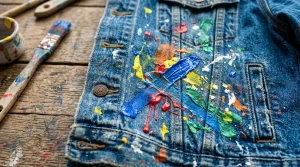
| Denim Twill | 100% Heavy Cotton | ★★★★★ Outstanding durability & flex resilience | Jeans, jacket back panels, denim patches |
| Linen & Hemp | Flax / Bast Fibers | ★★★★★ High absorption and rich organic texture | Tea towels, tablecloths, summer shirts, banners |
| Knitted Cotton Jersey | Knitted Cotton | ★★★★☆ Very good (Must dilute paint 20% for softness) | T-shirts, hoodies, baby onesies |
Step-by-Step Workshop Tutorial
1. Pre-Washing & De-Sizing Cloth
Never paint unwashed cloth. Factory sizing chemicals and starches prevent paint binders from touching the core cotton threads. Launder in hot water with standard detergent (no fabric softeners) and press flat with an iron.
2. Preparing the Backing Board
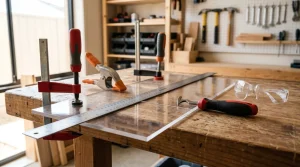
Insert a rigid cardboard sheet wrapped in wax paper beneath the painting area and secure with binder clips. This prevents paint from soaking through to the underlying layer and keeps the cloth taut.
3. The Golden 80/20 Dilution Formula
Heavy body acrylic straight from the tube creates a rigid plastic slab that feels like cardboard and cracks. Mix your acrylic paint with 15% to 20% clean water or textile medium to achieve the consistency of heavy cream. This allows the paint to dye the yarn fibers rather than resting on top.
4. Applying Thin, Layered Coats
Work thinned acrylic into the fabric weave using firm synthetic shader brushes. Apply 2 to 3 thin coats rather than one heavy layer. On dark or black cloth, apply an opaque titanium white undercoat first to ensure vibrant color payoff.
5. 48-Hour Air Cure
Allow painted cloth to air dry flat for 24 to 48 hours in a dust-free room to allow natural polymer cross-linking to establish.
6. Thermal Heat Setting
Cover the painted artwork with kitchen parchment paper. Set your household iron to medium-high dry heat (cotton setting, NO STEAM). Move the iron in small, continuous circles with firm downward pressure for 3 to 5 minutes across the entire design. Flip the cloth inside out and iron the reverse side for 2 minutes.
Laundry & Garment Longevity Rules
- Wait at least 7 full days after heat setting before laundering for the first time.
- Always wash inside out in cold water on a delicate or gentle cycle.
- Use mild liquid laundry detergent; avoid chlorine bleach and fabric softeners.
- Hang dry or line dry; avoid high-heat commercial tumble dryers.
Frequently Asked Questions
Will acrylic paint wash out of cloth in the laundry?
No. When applied to clean natural fibers and properly heat-set with an iron for 3 to 5 minutes, acrylic paint is 100% waterproof and permanent. It will not wash out during regular machine laundry.
Can I use baking paper for ironing?
Yes, standard silicone-coated kitchen parchment baking paper is heat-resistant up to 450°F and is the ideal non-stick barrier to protect your iron plate.
What should I do if the painted cloth feels too stiff?
After heat setting, gently crumple and flex the painted cloth with your hands for 2 minutes to break microscopic rigid polymer planes, then wash inside out with a splash of liquid fabric conditioner.
Artistic Effects & Advanced Acrylic Cloth Techniques
Explore these diverse fabric art methodologies to achieve distinctive designer effects on cloth:
| Artistic Technique | Required Viscosity | Application Tools | Tactile Result |
|---|---|---|---|
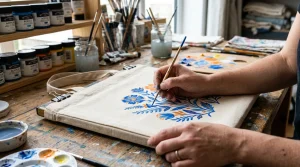
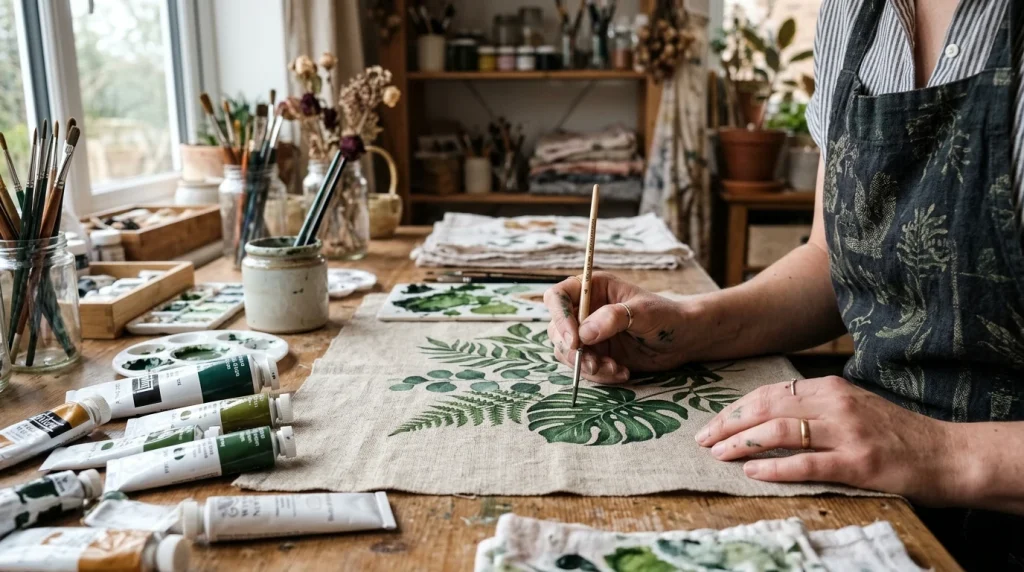
| Botanical Linework & Calligraphy | 80% paint / 20% water | #0 or #1 synthetic rigger / liner brush | Crisp, fine vector-quality lines that move with cloth |
| Impasto / Heavy Texture | Undiluted heavy body + fabric medium gel | Palette knife onto stiff duck canvas | 3D sculptural relief (best for non-wearable wall banners) |
| Bleed / Tie-Dye Watercolor Wash | 30% paint / 70% water | Sponge dropper onto wet pre-soaked linen | Ultra-soft, organic color transitions with zero plastic hand |
How to Care for Painted Cloth Over 50+ Wash Cycles
- Always allow a full 7-day cure window after ironing before the initial wash.
- Fasten all zippers, buttons, and clips on the garment to prevent metal teeth from abrading painted artwork.
- Place delicate hand-painted cloth items in a mesh laundry wash bag.
- Air dry flat away from direct blazing sunlight to preserve long-term pigment brilliance.
Get our latest guides, news, and insights highlighted in your Google Search & AI Overviews.