✨ This article was AI edited. Editorial responsibility: MissJ.eu.
Produced with AI. This article was artificially generated. Editorial responsibility: MissJ.eu.
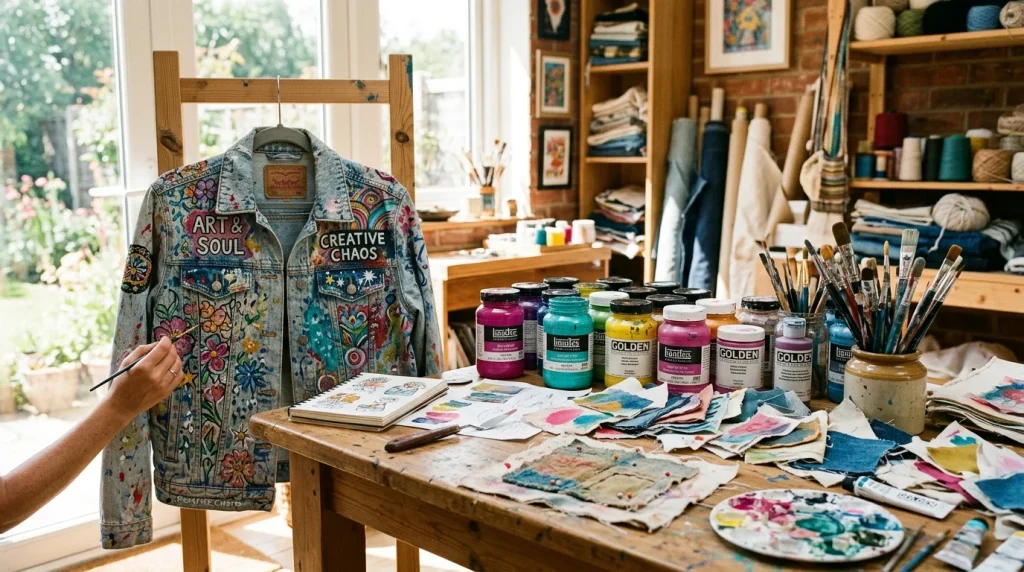
Customizing wardrobe staples with hand-painted artwork, floral patterns, band logos, and typography has become one of the most popular fashion personalization trends. For beginner crafters and DIY fashion enthusiasts, the most common question is: can we use acrylic paint on clothes?
The definitive answer is yes, absolutely. Standard acrylic paint can be used safely and permanently on clothing, provided you follow the correct textile preparation rules, dilution ratios, and thermal curing protocols. In this guide, we explore the science of acrylic textile adhesion, best fabric choices, common mistakes, and step-by-step instructions for creating long-lasting wearable art.
How Acrylic Paint Works on Garments
Acrylic paint is an emulsion of finely ground color pigments suspended in a water-based acrylic polymer resin. When applied to textiles:
- The liquid acrylic seeps into the microscopic spaces between the twisted yarn fibers.
- As water evaporates, the acrylic polymers undergo coalescence, fusing together into a continuous, flexible plastic film.
- Once cured and heat-set, this plastic film becomes insoluble in water and detergent, permanently locking the pigment into the fabric.
Best Fabrics for Acrylic Painting
| Fabric Material | Adhesion Rating | Flexibility & Longevity | Special Considerations |
|---|---|---|---|
| 100% Cotton (Denim, Canvas, Jersey) | ★★★★★ (Excellent) | Maximum permanent bond; high durability across washes | Must be pre-washed to remove factory sizing starches |
| Linen & Hemp | ★★★★★ (Excellent) | Very high durability; natural textured aesthetic | Thick weave absorbs paint quickly; thin layers required |
| Cotton/Polyester Blends (50/50) | ★★★★☆ (Very Good) | Good adhesion; slightly stiffer feel | Heat setting requires lower iron temperature to avoid melting polyester |
| Synthetic Fabrics (Nylon, Polyester, Rayon) | ★★☆☆☆ (Fair/Poor) | Paint sits on smooth surface; prone to peeling if bent | Requires specialized synthetic fabric primer or medium |
Key Techniques to Prevent Paint from Cracking or Stiffening
1. Dilution Control (The Golden Ratio)
Heavy body acrylic straight from the tube will dry like a rigid plastic shield that cracks when the garment bends. Mix your paint with 15% to 20% water or a textile medium to thin the viscosity, allowing the paint to dye the threads rather than coating over them.
2. Layering Strategy
Apply 2 to 3 thin, semitransparent layers instead of one thick heavy coat. Allow each layer to dry for 30 minutes before applying the next. This creates a flexible multi-layer film that stretches naturally with the fabric.
3. Non-Stretch Placement
Place your artwork on low-movement zones of clothing—such as the back panel of a denim jacket, the front thigh of jeans, or the chest pocket of a shirt—rather than high-friction, high-stretch areas like armpits, knees, or waistbands.
Complete Step-by-Step Application Process
- Wash and Iron: Launder the garment in hot water with standard detergent to strip sizing chemicals. Iron flat.
- Insert Cardboard Barrier: Place a cardboard insert inside the clothing item to prevent paint bleed-through.
- Sketch Design: Use chalk or an erasable fabric pen to sketch the outline.
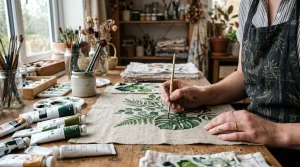
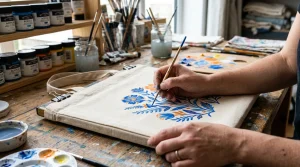
- Paint: Apply thinned acrylic paint with synthetic brushes in thin coats.
- Air Cure (24–48 Hours): Allow the garment to dry completely in a warm room so the polymer cross-links fully.
- Heat Set: Place parchment paper over the design and iron on medium-high dry heat (no steam) for 3 to 5 minutes across the entire painted zone.
Laundry & Maintenance Rules
- Always wait 7 full days after painting before the first machine wash.
- Always wash the garment inside out in cold water on a gentle cycle.
- Use mild liquid laundry detergent; avoid bleach or harsh fabric softeners.
- Air dry flat or hang on a clothesline; high tumble dryer heat can warp painted surfaces.
Advanced Tips for Professional Results
If you want to achieve gallery-grade results on your DIY apparel:
- Undercoating: For dark fabrics (black or dark navy), always lay down a base layer of titanium white thinned with 15% water. Let dry for 2 hours before painting colored details.
- Edge Crispness: Use low-tack blue painter’s tape to establish razor-sharp geometric borders and typography.
- Sealing: While optional, applying a thin topcoat of clear matte acrylic textile sealer after heat setting provides additional abrasion resistance against friction from backpack straps and seatbelts.
Frequently Asked Questions
Does acrylic paint wash out of clothes in the washing machine?
If the acrylic paint was applied to clean fabric and properly heat-set with an iron for 3 to 5 minutes, it is waterproof and permanent. It will not wash out during regular laundry cycles.
Do I need a fabric medium to paint on clothes with acrylics?
While a textile medium improves flexibility and softness on thin t-shirts, it is not strictly necessary. You can achieve permanent, flexible results on denim, canvas, and cotton by thinning acrylics with 15-20% water and thoroughly heat setting.
Is acrylic paint toxic on clothing?
Standard certified non-toxic (AP seal) acrylic paints are completely safe to wear on clothing once cured and dry. They off-gas no harmful fumes after the water content evaporates.
Can I dry my painted clothes in a tumble dryer?
While properly heat-set acrylic paint can survive low-heat tumble drying, hang-drying or flat air-drying is strongly recommended to preserve vibrant color brilliance and prevent microscopic edge peeling over dozens of laundry cycles.
Troubleshooting Common Textile Painting Mistakes
Even experienced DIY artists occasionally encounter unexpected texture or color issues. Here is how to diagnose and resolve the most frequent acrylic fabric painting challenges:
| Problem | Root Cause | Expert Solution |
|---|---|---|
| Cracking / Flaking Paint | Paint was applied too thickly or fabric has excessive stretch | Sand gently with fine 400-grit sandpaper; touch up with 80/20 thinned acrylic; re-heat set |
| Paint Bleeding Past Lines | Paint was over-diluted (>30% water) causing capillary wicking | Keep dilution strictly under 20%; outline borders with an opaque fabric paint marker first |
| Stiff "Cardboard" Texture | Heavy-body paint unthinned; heavy saturation | After heat-setting, tumble dry with wool dryer balls on low heat or hand-flex the fabric to soften polymer bonds |
Get our latest guides, news, and insights highlighted in your Google Search & AI Overviews.