Did you know that the way you spell “jewelry” can reflect where you come from? In the United States, “jewelry” is the standard, while “jewellery” is the preferred spelling in places like the UK and Australia. Understanding the nuances of spelling can not only enhance your writing but also sharpen your communication skills, especially in a global context. This ultimate guide will unravel the differences between these spellings, cater to your curiosity, and provide you with valuable insights on how to use them effectively. Whether you’re a jewelry enthusiast, a writer, or someone looking to communicate clearly across cultures, mastering this spelling will add finesse to your vocabulary. Dive in as we explore the world of jewelry spelling and equip yourself with the knowledge to sparkle in any conversation!
How to Spell Jewellery: Common Mistakes Explained
Understanding the intricacies of spelling “jewellery” can save you from common pitfalls that many encounter. One frequent mistake is the omission of the second ‘l’ in British English. This is particularly prevalent among American English speakers, who correctly spell it as “jewelry,” but may inadvertently drop the ‘l’ when attempting to use the British form. To clarify, in British and Australian English, the proper spelling is “jewellery,” while American English exclusively uses “jewelry.”
Another common error comes from mixing up other related terms, such as “jeweler” and “jeweller.” The American spelling utilizes “jeweler” without the additional ‘l,’ while the British version prefers “jeweller.” Similar discrepancies exist with words like “jeweled” versus “jewelled” and “jeweling” versus “jewelling.”
To combat these mistakes, it can be beneficial to develop a mental checklist or visual cues that remind you of the differences. For example, connecting the term “jewellery” with items that carry a sense of sophistication and tradition may help reinforce the correct spelling in your mind. You might even create flashcards or use spelling apps to practice. Ultimately, ensuring that you’re conscious of these differences will enhance your writing clarity and professionalism, particularly if you’re involved in businesses or creative writing related to jewellery.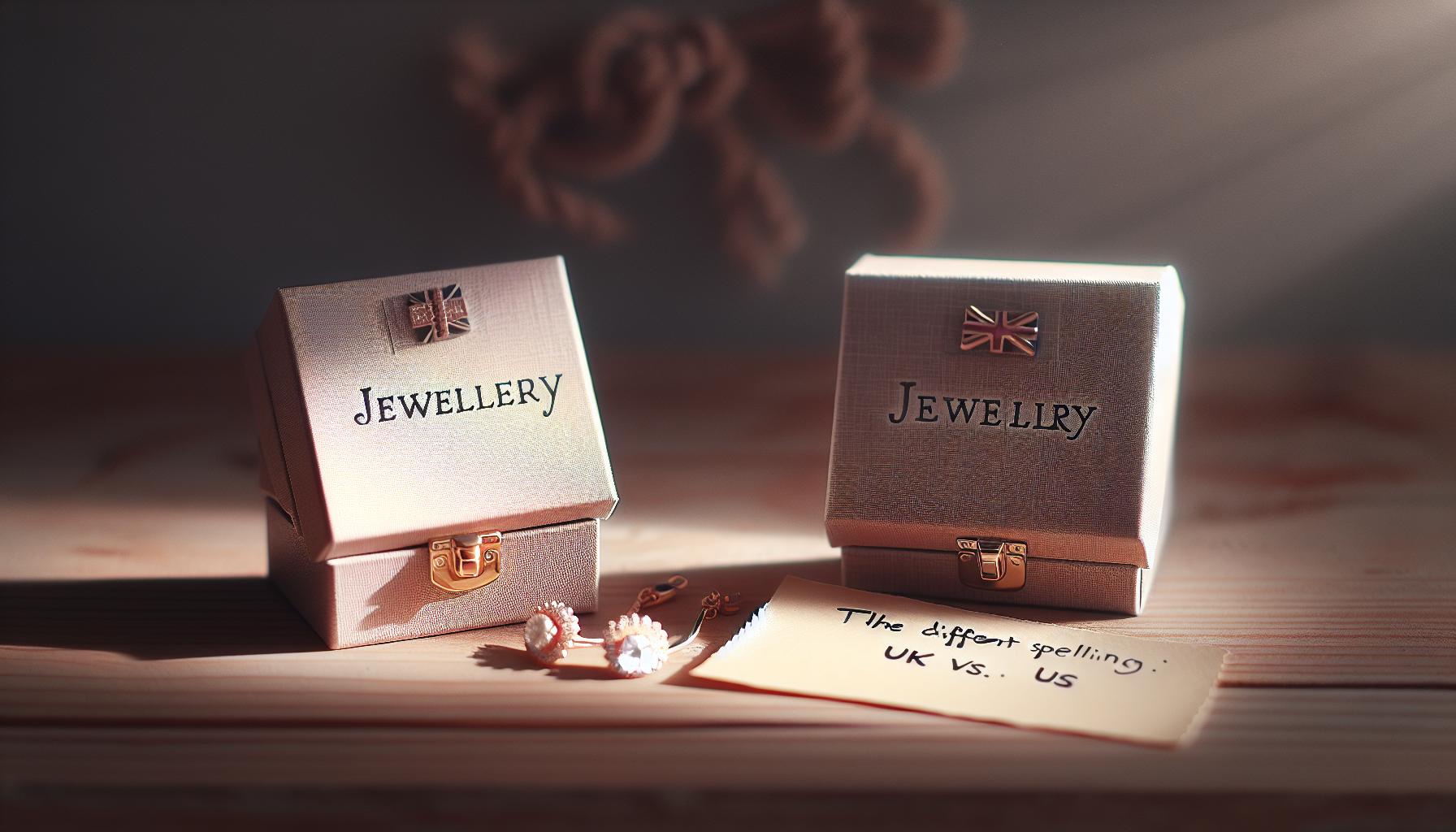
The Different Spellings of Jewellery: UK vs. US
The world of spelling can be deceptive, especially when it comes to terms like “jewellery.” In essence, there are two primary spellings for this word, each corresponding to different varieties of English: “jewelry” in American English and “jewellery” in British English. This distinction not only reflects regional preferences but also underlines cultural nuances in language usage. For those who may find themselves switching between these forms, grasping these variations is essential for effective communication.
It’s essential to recognize that the choice of spelling can convey more than correctness; it can affect how your writing is perceived. Many brands and businesses that cater to international audiences often face challenges when presenting their names. For example, a jewelry shop based in London would spell its name “Jewellery Boutique,” while a New York counterpart would use “Jewelry Boutique.” Such differences can influence brand recognition and customer expectations.
Another practical consideration arises in digital communication, where search engine optimization (SEO) plays a crucial role. If you’re running a website or blog about jewellery or jewelry, ensuring that you’re using the appropriate spelling for your target audience can significantly impact your visibility. Tailoring content with consistent regional spellings can enhance engagement and clarify your brand’s identity.
Ultimately, being mindful of these spelling differences can not only improve your writing clarity but also help in building a connection with your audience, whether they are from the UK, the US, or elsewhere. As you craft your content or engage with customers, remember that while the spelling may differ, the appreciation for beautiful pieces remains universal.
Understanding the Origins of the Word Jewellery
The history of the word “jewellery” is as intricate as the pieces it represents. Derived from the Old French word jewel, which itself comes from the Latin jocale, meaning “plaything,” its evolution reflects cultural shifts in the appreciation of decorative items. In the medieval era, the term began to encompass precious and ornamental items that signified wealth and status. As societal values evolved, so did the use of jewellery-a transition from mere adornment to heartfelt tokens and symbols of love, celebration, and identity.
In contemporary English, “jewellery” is the preferred spelling in British English, while “jewelry” is used in American English. This difference highlights not just a linguistic divergence but also cultural perspectives on adornment and self-expression. The varied spelling serves as a reminder of the rich tapestry of language shaped by history and geographic influences.
To appreciate the significance of these differences in spelling, consider how they reflect local craftsmanship and artistic traditions. In the UK, jewellery often embodies a classic elegance, often influenced by heritage styles, while American jewelry might embrace more modern and innovative designs. This cultural backdrop adds depth to how individuals interact with and cherish these items.
Understanding the origins of the word can greatly enhance your appreciation for jewellery and its role in history. Whether you’re collecting antique pieces or designing your own, recognizing the historical significance and cultural nuances behind the term can enrich your experience. It helps to foster a deeper connection with the art of adornment and encourages mindful choices when considering your own style.
Phonetics: How to Pronounce Jewellery Correctly
To confidently engage in conversations about jewellery, it’s not just about knowing how to spell it; understanding how to pronounce it correctly is equally important. The word “jewellery” (spelled with two “l’s” and an extra “e”) can often trip up those unaccustomed to its pronunciation, especially in a global context where accents and dialects vary widely.
The correct pronunciation of “jewellery” is typically broken down into three distinct syllables: jew-uhl-ree. The first syllable, “jew,” rhymes with “few” and “blue,” while the second syllable, “uhl,” is a softer, unstressed sound akin to the sound in “a” in “sofa.” The final syllable, “ree,” retains the individual stress, completing the word with a clear and vibrant sound. This phonetic structure may vary slightly based on regional accents; however, maintaining this three-syllable breakdown will guide most speakers toward clarity.
To practice this pronunciation, consider the following techniques:
- Breaking It Down: Repeat each syllable slowly: “jew,” “uhl,” “ree.” Gradually increase your speed as you become more comfortable.
- Contextual Examples: Use the word in sentences related to your interests, like “I am fascinated by antique jewellery designs.” This helps cement the word’s use in your vocabulary.
- Utilizing Audio Resources: Listen to pronunciation guides online. Resources such as YouTube or language learning platforms can provide audio examples from native speakers.
A solid grasp of pronunciation not only enhances your confidence in discussions but also enriches your appreciation for the art and culture surrounding jewellery. Whether you are engaging in a casual conversation with friends or discussing it in a professional setting, the right pronunciation will ensure you’re clearly understood and respected as someone knowledgeable about the topic.
Top Tips for Remembering Jewellery Spelling
To remember the spelling of “jewellery,” it helps to engage both your visual memory and phonetic awareness. This beautiful word can easily be confused with its American counterpart, “jewelry,” so emphasizing the nuances in its structure can bolster your recall. Start by focusing on its distinctive elements: two “l’s” and a bonus “e.” Associating the word with its meaning can also help; think of the multiple gemstones and precious metals that comprise a piece of jewellery, creating a vivid mental picture of elegance adorned and sparkling with richness.
A practical method to ingrain the spelling is to create mnemonic devices. For instance, “Jewels Under Each Lovely Luster” ties the meaning to its spelling. Visual learners might benefit from writing out the word repeatedly in a colorful script, or even crafting the letters using beads or charms to create a tactile connection.
Additionally, context plays a crucial role. Incorporate the word in everyday conversations, whether you’re discussing your latest purchase or sharing tips about jewellery care. The more you use it, the more comfortable you’ll become with the spelling. Try sending messages to friends about your favourite jewellery pieces or trends-every time you write “jewellery,” your mind reinforces the correct letters through usage.
Finally, take advantage of technology. Consider using digital flashcards or spelling apps where you can practice daily. Engaging in fun spelling games related to jewellery not only sharpens your spelling skills but also deepens your appreciation for this captivating realm of adornment. By intertwining spelling practice with the joy and culture of jewellery, you will remember how to spell “jewellery” with confidence and flair.
Exploring Regional Variations in Jewellery Spelling
The way “jewellery” is spelled can tell you a lot about where someone is from. In the realm of English language, especially regarding the beautiful world of adornments, “jewellery” is used in countries like the UK, Australia, and other Commonwealth nations, while “jewelry” reigns supreme in the United States. This distinction, while seemingly trivial, can lead to misunderstanding or confusion in international communication.
Understanding these regional variations goes beyond mere spelling; it reflects cultural preferences and linguistic evolutions. British English preserves the traditional spelling derived from French, where “jeweller” and “jewellery” retain the extra “l” and “e”. In contrast, American English simplifies it, which is part of a larger trend in the language toward streamlined spelling. This difference can be a source of light-hearted debate among language enthusiasts and even among those in the jewellery business who operate internationally. Ensuring that you use the correct spelling in your communications is essential, especially in marketing materials and e-commerce platforms, where consistency reinforces brand identity and professionalism.
For those venturing into the jewellery trade, particularly online, understanding these nuances is crucial. Customers from different regions may feel more connected when they see familiar spelling, affecting their purchase decisions. Therefore, it’s wise for brands to tailor their content according to their primary audience. Furthermore, showcasing knowledge of regional spellings can enhance customer trust and brand authenticity, ensuring that your communication resonates on a personal level.
The Importance of Correct Spelling in Branding
The right spelling of “jewellery” can significantly impact your brand’s perception and accessibility in the competitive marketplace. Missteps in spelling may not only confuse consumers but can also undermine their trust in your brand. In an era where authenticity and clarity are paramount, ensuring attention to detail-including the correct spelling of terms associated with your products-is essential.
When potential customers encounter your brand name or product descriptions, they quickly form impressions based on the professionalism displayed in your written communications. A well-crafted message that uses “jewellery” appropriately in regions that expect it can foster a sense of familiarity and connection. Conversely, using “jewelry” in the UK or Australia could lead to misunderstandings or turn customers away. For example, a brand that specializes in bespoke pieces might lose out on clientele simply by faltering on such a straightforward detail.
Moreover, the importance of correct spelling goes beyond mere aesthetics. In digital marketing and e-commerce, brand consistency is crucial. A cohesive brand voice that includes correct spelling-whether “jewellery” or “jewelry”-helps establish a strong identity. This consistency should extend across all platforms, including social media, websites, and printed materials. When your branding aligns with customer expectations regarding spelling, it signals professionalism and attention to detail that discerning buyers appreciate.
Ultimately, correct spelling in branding plays a vital role not only in enhancing market connections but also in elevating the overall customer experience. By prioritizing these details, you empower your audience to trust your brand without hesitation, whether they are seasoned collectors or beginners exploring the world of adornments. This careful craftsmanship of communication can lead to lasting loyalty and increased sales, qualities that every jeweller aspires to cultivate.
Creative Writing: Using ‘Jewellery’ in Context
Jewellery has a way of sparking the imagination, conjuring images of elegant designs and cherished memories. Whether you’re penning a heartfelt note for a loved one’s birthday, crafting marketing content for your jewellery business, or sharing a personal anecdote, using the correct spelling goes beyond mere technicality; it shows respect for the craft. As you weave ‘jewellery’ into your writing, consider how the context shapes its significance and resonate with your readers.
When expressing the beauty of a piece, opt for evocative language that captures its essence. For instance, describing a necklace as “a shimmering piece of jewellery” creates a vivid image that invites admiration. If you’re a blogger or a business owner, share tips that guide your audience in styling their jewellery. Phrases like, “Pair your handmade jewellery with a classic white dress for an eye-catching contrast,” not only demonstrate how to wear these pieces but also emphasize the importance of the spelling tailored to the audience’s expectations based on regional norms.
Using ‘jewellery’ in storytelling can also help build emotional connections. Consider sharing anecdotes about how certain pieces were passed down through generations. You might write, “This delicate gold bracelet is more than just jewellery; it holds memories of my grandmother’s love and adventure.” Such narratives invite readers to forge their own connections with the pieces, deepening their appreciation for the art of jewellery-making.
Additionally, engaging with your audience through questions can stimulate interaction and connection. You could ask, “What’s your favorite piece of jewellery that carries a story?” This not only encourages user-generated content but also solidifies your brand’s commitment to authenticity and community. Remember, when using ‘jewellery,’ ensure that every piece of content reflects the same meticulous attention to detail that you apply to your creations, reinforcing your commitment to quality and elegance.
Jewellery Spelling in the Digital Age: Trends and Tools
In today’s digital landscape, where communication flows seamlessly across borders, the spelling of terms like “jewellery” has become increasingly relevant. As you navigate various platforms-be it social media, blogs, or e-commerce sites-understanding the nuances of spelling can enhance your engagement with diverse audiences. The spelling “jewelry” is often used in American contexts, while “jewellery” is the standard elsewhere, including the UK and Australia. This linguistic distinction is not just trivia; it can affect how your audience perceives your content and brand.
To maintain clarity and professionalism, utilize tools like spell checkers and grammar apps, which can help ensure you’re using the correct spelling for your target demographic. Moreover, platforms like Grammarly and Hemingway Editor can refine your writing style while addressing regional spelling variations, fitting your tone to both your audience and medium. Additionally, using auto-correct features on smartphones and word processors can alleviate common mistakes. Yet, remember to manually review these suggestions, as automated tools can also generate errors or overlook contextual nuances.
Engaging your audience effectively often means aligning your content with their preferences. For businesses, spelling ‘jewellery’ correctly in marketing materials or product descriptions reinforces brand integrity and respect for cultural differences. This thoughtful approach not only enhances professional image but also fosters trust and connection with potential customers. Utilizing content creation tools such as Canva or Adobe Spark can further elevate your presentation, ensuring that your visuals correspond with your careful attention to detail in spelling.
Embrace digital platforms for community engagement and education. Host discussions or Q&A sessions where followers share their experiences with jewellery-this could lead to a deeper understanding of the importance of correct spelling in various contexts. As trends evolve, staying informed about regional colloquialisms and consumer expectations in relation to spelling can keep your brand relevant and relatable.
In sum, as the digital age progresses, mastering the spelling of ‘jewellery’ is more than technical proficiency; it’s an opportunity to connect with your audience authentically, reinforcing the beauty and artistry inherent in the craft.
Common Words Confused with Jewellery: A Quick Guide
Understanding the nuances of language can elevate your communication and enhance your brand perception-especially in the world of jewellery, where precision matters. While it might seem straightforward to some, many often confuse terms closely related to “jewellery.” Misunderstandings can lead to errors in branding or miscommunication with clients. Here’s a quick guide to help clarify these commonly confused words.
- Jewellery vs. Jewelry: The most notable distinction is the spelling itself, with ‘jewellery’ being the British English term and ‘jewelry’ being the American English variant. While they refer to the same category of decorative items, knowing your audience can guide which spelling to use.
- Accessory: While jewellery is a type of accessory, the term ‘accessory’ broadly includes other items such as bags, hats, or scarves that complement outfits. This distinction is crucial for marketing and categorizing products correctly.
- Gemstone vs. Jewel: A ‘gemstone’ refers to a precious or semi-precious stone, while ‘jewel’ denotes a cut and polished form of a gemstone set in jewellery. Although often used interchangeably, the specific context can influence clarity in descriptions.
- Ornament: This term covers a wider range of decoratively crafted items, including those not categorized as jewellery, such as home decor pieces. Make sure to use ‘ornament’ when referring to broader decorative elements.
Navigating these terms will not only enhance your credibility but also provide clarity to your audience. For example, using ‘jewellery’ correctly in your brand communications signals an understanding of linguistic subtleties that many consumers value. Understanding these distinctions ensures that your descriptions are accurate, making your content engaging and accessible, whether you’re crafting product descriptions or writing blog posts on jewellery care.
Resources for Spelling: Dictionaries and Online Tools
In an age dominated by digital communication, having the right resources to confirm the correct spelling of words, especially specialized terms like “jewellery,” is invaluable. Knowledge is at your fingertips thanks to a plethora of online dictionaries, thesauruses, and spelling tools that can provide clarity and confidence when crafting brand communications, marketing materials, or personal notes.
For those seeking quick references, websites like Merriam-Webster, Oxford English Dictionary, and Collins English Dictionary not only confirm the spelling differences between “jewelry” (American English) and “jewellery” (British English) but also provide detailed etymologies and usage examples. You can search these sources online to ensure your spelling aligns with your target audience, whether you are appealing to a UK or US market.
Moreover, online grammar checkers and writing assistants like Grammarly, Hemingway, and ProWritingAid offer real-time assistance. They can help you spot incorrect usages and suggest the proper spelling based on your selected language variant. These tools often include context-aware suggestions, which can enhance the clarity of your writing overall.
Lastly, engaging with spelling games on platforms like Quizlet or educational websites like Vocabulary.com can make learning fun while reinforcing correct spelling through interactive exercises. Not only do they help you master “jewellery,” but they also increase your overall linguistic proficiency, empowering you to communicate more effectively about your passion for jewellery and expand your knowledge beyond mere spelling.
Learning Through Fun: Games for Mastering Jewellery Spelling
Engaging with spelling games to master the correct use of “jewellery” can add an enjoyable twist to learning. Did you know that interactive learning can significantly enhance retention? Incorporating games and quizzes not only boosts your confidence to correctly spell “jewellery” but can also turn what might feel like monotonous study into a fun challenge.
One effective way to practice is through online platforms that offer spelling games, such as Quizlet and Vocabulary.com. These sites frequently feature user-generated content, allowing you to find or create custom sets focused specifically on “jewellery” and its variants. Gamifying your learning experience can involve timed quizzes, where you race against the clock to define terms like “jewelry” versus “jewellery,” or matching exercises that connect definitions to the correct spelling.
Benefits of Incorporating Games into Learning
- Active Engagement: Games encourage active participation rather than passive reading, making the learning process more engaging.
- Immediate Feedback: Many educational game platforms provide instant feedback on your answers, helping you learn from your mistakes in real time.
- Friendly Competition: You can challenge friends or family members, which often fosters a fun competitive spirit, motivating everyone to improve their spelling skills.
For anyone passionate about jewellery, mastering its spelling through games not only sharpens your linguistic abilities but also reinforces your connection to the world of adornments. This playful approach helps in seamlessly memorizing spelling rules while nurturing your enthusiasm for your jewelry collection or crafting endeavors.
Frequently asked questions
Q: What are the different spellings of jewellery?
A: The word “jewellery” is primarily spelled with two “l’s” in British English, while in American English, it is commonly spelled “jewelry” with one “l.” Understanding these variations can help avoid confusion when targeting audiences in different regions.
Q: Why is correct spelling important in jewellery branding?
A: Correct spelling in branding is crucial as it reflects professionalism and attention to detail. Misspellings can lead to misunderstandings and can negatively affect brand credibility. Utilizing proper spelling, such as “jewellery” or “jewelry,” establishes trust with your audience.
Q: How can I remember the correct spelling of jewellery?
A: To remember the spelling of “jewellery,” break it down into syllables: “jew-el-ry.” Additionally, associating the word with common phrases or visual cues can reinforce memory. Practice using it in sentences, which can also aid retention.
Q: Are there regional differences in jewellery spelling beyond UK and US?
A: Yes, apart from the UK and US variations, other countries may use distinct spellings influenced by local languages. For instance, Canadian English typically follows British English while other regions may adopt variations based on local linguistic preferences.
Q: How do phonetics help in pronouncing jewellery correctly?
A: Phonetics aid in pronouncing “jewellery” as it can be broken down as “jew-el-ree.” Emphasizing the “jew” and articulating the two syllables can enhance clarity. Listening to audio pronunciations can also be beneficial in mastering its pronunciation.
Q: What are common mistakes people make when spelling jewellery?
A: Common spelling mistakes include omitting the second “l” (writing “jewelry”) or unclear pronunciation leading to misspelling. To avoid these, ensure consistent practice and reference reliable sources, such as dictionaries or spelling tools available in the article’s resources.
Q: Can spelling variations affect SEO for jewellery websites?
A: Yes, using different spellings like “jewelry” and “jewellery” can impact SEO by attracting different search queries. Implementing both variations strategically in content can help the website rank well for both British and American audiences, enhancing visibility.
Q: What resources can help with mastering the spelling of jewellery?
A: Useful resources include online dictionaries, spell-check tools, and games designed to enhance spelling skills. The article’s section on Educational Resources offers links to effective tools and games for further learning.
Future Outlook
Now that you’ve mastered how to spell “jewellery” perfectly, don’t stop here! Explore our guides on jewellery care and cleaning techniques to keep your pieces sparkling. Interested in DIY projects or looking to start your own jewellery shop? Check out our comprehensive resources that dive into everything from styling tips to authentication methods.
Don’t hesitate to leave your thoughts in the comments below-what topics would you love to learn more about? Visit our site for more insights to ensure your journey in the world of jewellery is both rewarding and engaging. Remember, every piece tells a story; let us help you tell yours!
Get our latest guides, news, and insights highlighted in your Google Search & AI Overviews.