
In a world where counterfeit jewelry is rampant, knowing how to tell if your jewelry is real gold is more crucial than ever. Gold jewelry not only carries intrinsic value but also sentimental significance, making it essential to ensure its authenticity. Many buyers face the anxiety of being deceived, especially online, where visual cues can be misleading. Fortunately, there are simple, foolproof tests you can perform at home to verify your gold’s authenticity. From magnetic tests to acid tests, each method offers insight into your jewelry’s true nature. Dive in to discover these valuable techniques and empower yourself to make confident, informed decisions in your jewelry purchases. Ensure that your treasures are indeed the genuine articles you cherish!
How to Identify Real Gold Jewellery
Recognizing real gold jewelry can be as straightforward as understanding a few telling characteristics and conducting some simple tests. Gold is not only a timeless investment but also a precious adornment that often holds significant sentimental value. One of the first steps in identifying real gold is checking for hallmarks or stamps usually located on the inside of a ring or the clasp of a necklace. Hallmarks indicate the purity of the gold, such as 10K, 14K, or 18K, with higher numbers signifying a greater gold content. Importantly, while many genuine pieces have these marks, some older or uniquely crafted items may not, so it’s essential to explore additional methods.
One effective approach to confirm authenticity is the acid test. This method involves applying a small amount of nitric acid to a discreet area of the piece. Real gold will not react to the acid, while fake gold will often turn green or change color. However, this test can cause damage to the jewelry, so it should be approached cautiously. For a non-destructive alternative, consider the magnet test: real gold is not magnetic, so if your piece sticks to a magnet, it’s likely not genuine.
Visual inspection can also reveal authenticity cues. Look for a consistent color and shine; authentic gold tends to have a warm yellow hue that remains consistent and does not tarnish. If you notice any discoloration, particularly in pieces marketed as “gold-plated,” that’s a red flag. For those uncertain after performing these tests, seeking out a professional jeweler for evaluation can provide peace of mind. Experienced jewelers have the tools and knowledge to confirm authenticity, ensuring your precious items are truly what they claim to be.
Simple Tests to Check Gold Authenticity
Determining the authenticity of gold jewelry can often feel daunting, but fortunately, there are several straightforward tests that anyone can perform at home. These simple methods not only save you a trip to the jeweler but also empower you to make informed decisions about your jewelry transactions and collections.
One of the most common tests is the magnet test. Since real gold is not magnetic, grab a strong magnet and see if your jewelry is attracted to it. If it sticks, the piece is likely a combination of metals or gold-plated rather than solid gold. Another easy method is the water test – gold is dense, so it should sink quickly in water, while fake gold covering lighter materials may float or suspend in water.
Visual inspection is also crucial in identifying genuine gold. Check for a consistent color and shine. Authentic gold will have a warm yellow hue that remains uniform across the piece. Look for the hallmark, which indicates the gold content (e.g., 10K, 14K, 18K). However, keep in mind that some older or handmade pieces may not have these markings.
Lastly, the acid test offers a reliable assessment of authenticity but should be conducted carefully. This test involves applying a small drop of nitric acid to a discreet area of the jewelry. Real gold remains unchanged, while fake gold will typically react to the acid. As this method can damage the item, it’s best used as a last resort or by someone experienced with jewelry testing.
By incorporating these simple tests into your approach, you can gain confidence in identifying real gold and avoid the pitfalls of compromised purchases.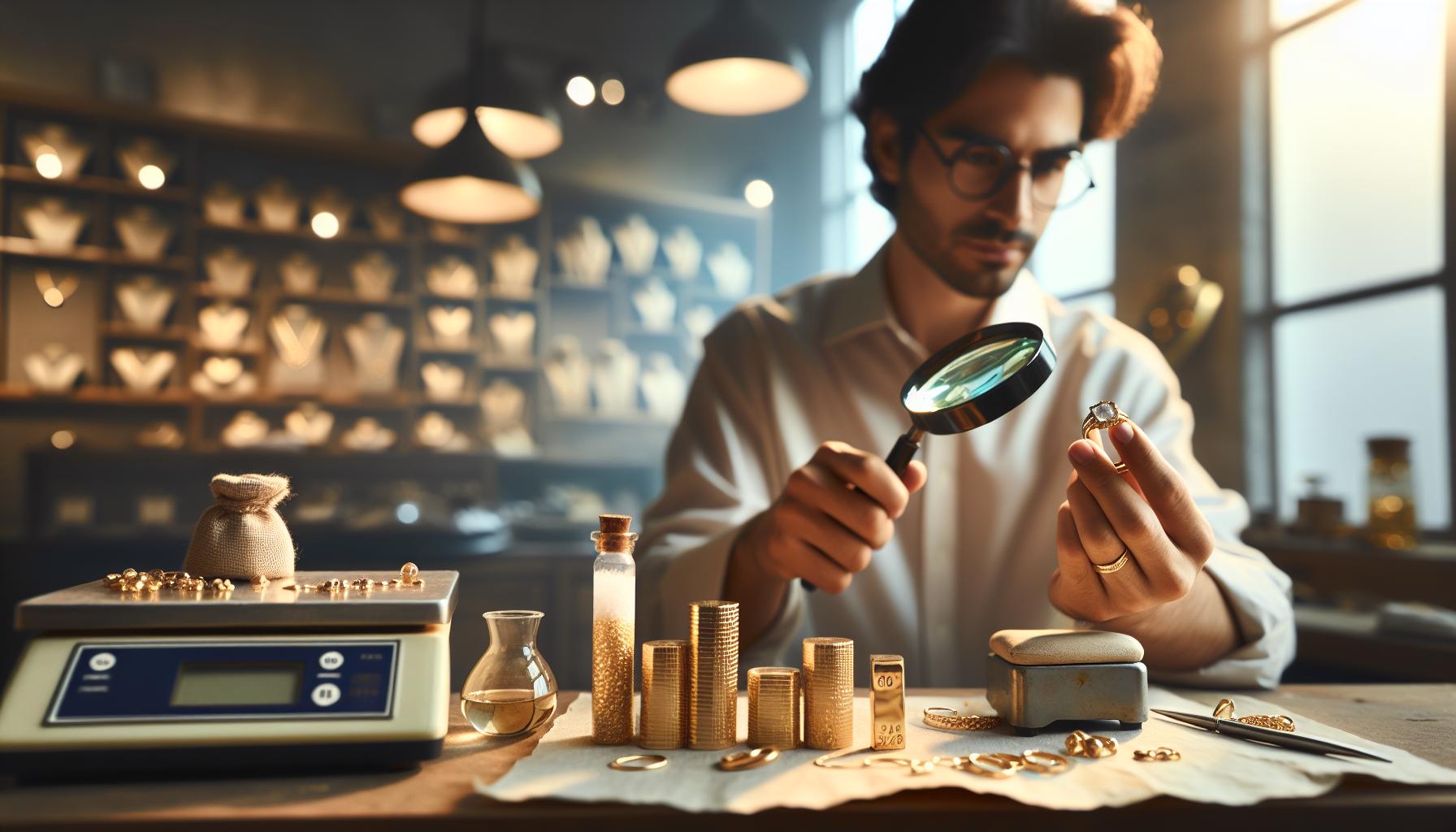
Understanding Gold Purity: Karat vs. Fineness
Understanding the purity of gold can greatly enhance your confidence when shopping for jewelry or evaluating pieces you already own. The purity of gold is typically measured in two ways: karats and fineness. Both methods convey important information about the quality of the gold, helping you discern real gold from fakes or lower-quality alternatives.
Karat System
The karat system denotes the proportion of gold in a piece of jewelry relative to other metals. Pure gold is considered 24 karats (24K), which means it contains 100% gold. However, pure gold is often too soft for everyday wear, which is why it is alloyed with other metals to increase durability. Here’s a quick breakdown of common karat values:
- 24K: 100% gold
- 22K: 91.6% gold
- 18K: 75% gold
- 14K: 58.3% gold
- 10K: 41.7% gold
As you can see, the higher the karat number, the more gold content is present. This is crucial for determining both the quality and value of the piece. Keep an eye out for markings on your jewelry-reputable jewelers will often stamp the karat weight to provide clarity about the gold content.
Fineness Scale
Alternatively, the fineness scale expresses gold purity in parts per thousand. For instance, if a piece of jewelry is marked as 750, it signifies that there are 750 parts of gold out of 1,000, equating to 18K gold. This system is widely used in Europe and offers a clear and precise way to gauge gold content. Here is a simple reference table:
| Fineness (ppm) | Karat Equivalent |
|---|---|
| 999 | 24K |
| 916 | 22K |
| 750 | 18K |
| 583 | 14K |
| 417 | 10K |
By understanding both karat and fineness measurements, you are better equipped to determine the authenticity and value of gold jewelry. It empowers you to make educated decisions whether you’re investing in a piece or ensuring that your treasured items are genuinely what they claim to be.
The Acid Test: A Step-by-Step Guide
One of the most reliable methods for confirming the authenticity of gold jewelry is the acid test. This highly effective technique can reveal whether your piece is genuine or merely a gold-plated imitation. However, it’s important to approach this test with caution, as the acid involved can be corrosive. Gather the necessary materials, which typically include a testing kit (available at jewelry supply stores), a piece of untested gold jewelry, and a stone or tile for testing.
To perform the acid test, follow these straightforward steps:
- Preparation: First, select a discreet area on the jewelry piece that won’t be overly visible when worn. This might be the inner side of a ring or along a chain, where any potential markings will be less noticeable.
- Scratch the Surface: Use the accompanying testing stone to gently scratch the jewelry. This will leave a small powder trail of gold on the surface, which is essential for the test.
- Apply the Acid: Next, take the acid solution specified for the karat you want to test (for instance, 10K, 14K, or 18K). Carefully drop a small amount onto the scratch made in the previous step.
- Observe the Reaction: Pay close attention to how the acid interacts with the gold. Genuine gold will remain unchanged, while fake gold or lower-quality alloys will change color or dissolve. If the scratched line disappears or becomes green, the piece is likely not real gold.
- Rinse and Clean: After testing, wash the jewelry gently with soap and water to remove any remaining acid. This will help avoid any damage to your piece.
Using the acid test provides a definitive answer about the authenticity of your gold jewelry, but it is also key to remember that it may leave a small mark. For those who wish to preserve their pieces without altering them, consider seeking professional evaluation or alternative testing methods, like a visual inspection or a magnet test, to ensure your jewelry remains in pristine condition after testing.
Magnet Test: Does Gold Attract?
When trying to determine if your gold jewelry is real, one surprisingly simple method involves a magnet. True gold is not magnetic, which makes this test straightforward and accessible for anyone. If you hold a magnet near the jewelry and it sticks, you can be fairly certain that the piece is not genuine gold, as it likely contains ferromagnetic metals, which are more common in counterfeit or lower-quality items.
To perform the magnet test effectively, follow these steps:
- Select a Magnet: Use a standard refrigerator magnet or a more powerful neodymium magnet for better results.
- Test the Jewelry: Bring the magnet close to the piece of jewelry. Pay attention to how it reacts.
If the jewelry is unaffected and does not attract the magnet, that’s a good indication it may be real gold. However, it’s important to note that just because an item doesn’t stick to a magnet does not guarantee it is authentic gold; some other non-magnetic metals may also be present.
While the magnet test is an excellent preliminary check, it’s recommended to use it in conjunction with other methods, like a visual inspection or the acid test, to enhance the reliability of your assessment. Always remember that for a definitive evaluation, especially for valuable pieces, consulting a professional jeweler is the best course of action.
Visual Inspection: Signs of Real Gold
When assessing the authenticity of gold jewelry, a careful visual inspection can reveal a wealth of information that helps differentiate real gold from its counterfeit counterparts. Start by checking for any markings on the jewelry piece. Genuine gold jewelry is typically stamped with a hallmark that indicates its purity, such as “14K,” “18K,” or “24K.” If you see numbers like these, they suggest that the item is made of real gold, with the number representing the gold content relative to other metals in the alloy. For example, “14K” means that 14 out of 24 parts of the alloy are gold, reflecting a 58.3% purity.
Next, examine the color and finish of the gold. Real gold has a specific warm hue and should not have any discoloration. It is important to pay attention to the overall quality of craftsmanship as well; poorly crafted jewelry with visible seams or irregularities often indicates a fake. Real gold is usually more durable, maintaining its shine and elegance over time, while fake gold may appear dull or tarnished.
Another important aspect to consider is the weight of the piece. Gold is a dense metal, and genuine gold jewelry will feel heavier than it appears. If the item feels light or flimsy, it may not be real gold. Additionally, look for signs of corrosion or flaking. A genuine gold piece will not rust or corrode, whereas fake options, especially those made with plated metals, may show signs of wear or discoloration as they age.
Lastly, take a close look at the jewelry’s edges and bindings. Real gold typically has smooth and rounded edges because of its manufacturing process, while counterfeit pieces may feature rough edges or seams. By combining these visual clues, you can conduct an effective evaluation that helps ensure the jewelry in your collection is truly worth its weight in gold. Remember, while these visual tests can be telling, combining them with professional evaluations is always a good practice for high-value items.
Professional Evaluation: When to Seek Help
When doubts arise about the authenticity of your gold jewelry, seeking professional evaluation can be the most reliable step to ensure you have genuine pieces. Jewelers and appraisers possess specialized knowledge and tools that can deliver accurate assessments far beyond simple tests you might perform at home. Their expertise not only provides peace of mind but can also affect the value of your items, making this investment worthwhile.
It’s critical to know when to consult a professional. If you have a piece that you believe may be vintage or valuable-like an inherited item or a significant purchase-this is a perfect candidate for a professional evaluation. Expert appraisers can also identify unique characteristics, such as historical context or craftsmanship, that could enhance the item’s worth. During an appraisal, ask about specific tests they perform. Most reputable jewelers will conduct a variety of methods, including acid tests and electronic testing, and some will have access to advanced spectrometers that can accurately measure gold content.
Moreover, if you’re considering selling your gold jewelry, a professional evaluation can help you understand its market value. This is essential not only for setting a fair price but also for ensuring that you receive a full and honest appraisal that reflects the true quality of your gold. Always ask for a written appraisal that includes detailed descriptions and photographs, which can also serve as documentation for insurance purposes or resale.
Lastly, if you’re concerned not just about the authenticity but also about the ethical sourcing of your gold, professionals can often provide insights or certifications that identify whether the piece is conflict-free. This addition adds an extra layer of integrity to your collection. Emphasizing the importance of professional evaluation reinforces the idea that valuing our jewelry is about not only knowing its worth but also understanding its story and ensuring its authenticity.
Ensuring Your Gold is Conflict-Free
The choice to wear gold jewelry can also reflect your values, especially concerning ethical sourcing. Knowing that your gold pieces are conflict-free can enhance your confidence and satisfaction in your purchases. Conflict-free gold is sourced from mines that adhere to strict environmental and social standards, ensuring that the extraction process does not contribute to violence or human rights abuses. This conscious choice supports sustainable mining practices and the well-being of workers involved in the production.
One way to ensure your gold jewelry is conflict-free is by looking for certifications from established organizations. Brands that prioritize ethical sourcing often provide transparency in their supply chains and offer proof of their sourcing practices. These certifications may come from third-party organizations like the Responsible Jewelry Council or Fairtrade, which ensure that the gold has been mined responsibly. When shopping for gold jewelry, especially engagement rings or investment pieces, inquire about the brand’s sourcing policies and whether they can provide documents or reports that verify their claims.
As a consumer, you can support businesses committed to ethical practices. Research companies that specialize in fair trade or sustainable gold options, such as those that offer Fairtrade Gold jewelry or companies like Automic Gold, known for their ethical practices. Some jewelers work directly with miners to ensure that communities are treated fairly and receive a fair wage. By choosing these jewelry providers, you help create demand for sustainable practices, influencing the industry as a whole.
Lastly, maintain open communication with jewelers, asking pertinent questions about the origins of their gold. This not only equips you with knowledge but also signals to retailers that consumers increasingly value ethical considerations. Your informed choices not only enhance your personal style but also support a better future for the jewelry industry and the communities involved in gold mining. Empowering yourself with information about conflict-free gold means you’re not just a shopper; you’re a catalyst for positive change in an industry that values ethical integrity.
Caring for Your Gold Jewellery: Tips for Longevity
Maintaining the beauty and integrity of your gold jewellery is essential for ensuring it lasts a lifetime. Proper care can prevent scratches, tarnishing, and damage, allowing you to enjoy your pieces for years to come. Here are some effective tips to keep your gold jewellery looking its best.
To begin with, always store your gold items separately to avoid scratches. Use soft cloth pouches or a dedicated jewellery box with compartments. If you have multiple pieces, consider wrapping each item in a soft cloth or placing it in individual pouches. This simple step will protect your jewellery from being scratched by other pieces or hard surfaces.
When it comes to cleaning, a gentle touch is key. A soft, lint-free cloth can effectively remove dirt and oils. For a more thorough cleaning, prepare a lukewarm solution of mild dish soap and water. Soak your gold jewellery for a few minutes, then gently scrub with a soft toothbrush to reach intricate details. Rinse thoroughly and dry with a soft cloth to ensure no soap residue remains. Avoid harsh chemicals or abrasive materials, as they can damage the finish.
Additionally, be mindful of wearing your gold jewellery while engaging in activities that could cause exposure to harsh conditions. Remove your pieces before showering, swimming in chlorinated pools, or applying lotions and perfumes. This precaution will help maintain the shine and prevent any chemical reactions that may dull the metal.
Lastly, regular professional checkups can be beneficial. Many jewellers offer cleaning and inspection services to check for loose stones or potential damage. They can also provide insights on the best ways to care for your specific items. Investing in these services occasionally can extend the life of your jewellery and keep it in top condition.
By following these straightforward tips, you’ll not only preserve the appearance of your gold jewellery but also cherish the memories associated with each piece, ensuring they remain as stunning as the day you acquired them.
Common Misconceptions About Gold Jewellery
Many people hold that can lead to confusion and even financial loss. For example, one prevalent belief is that all gold jewellery is pure gold. In reality, most gold jewellery is alloyed with other metals to enhance its strength and durability. The purity of gold is measured in karats, with 24-karat gold being the purest form. However, pieces labeled as 14k or 18k are often more practical for everyday wear, providing a balance of beauty and resilience.
Another widespread myth is that gold jewellery will never tarnish. While it is true that gold itself does not tarnish, the alloys used in gold jewellery can react with moisture, air, and chemicals, leading to discoloration. To keep your jewellery looking its best, it’s essential to clean it regularly and store it properly, avoiding exposure to harsh substances.
Additionally, many assume that the presence of a hallmark guarantees authenticity and quality. While hallmarks can indicate the metal’s purity and the jeweler’s credibility, not all pieces are stamped. Therefore, relying solely on hallmarks is not sufficient; conducting other tests is crucial to ensure you are buying genuine gold.
Here are some tips to dispel these misconceptions and help you spot fake gold:
- Understand Karat vs. Fineness: Familiarize yourself with the karat system, as it helps determine the purity of gold.
- Conduct Tests: Use tests such as the acid test or magnet test to evaluate the authenticity of your jewellery.
- Seek Professional Evaluation: If in doubt, consult with a certified jeweler for an expert opinion.
By addressing these misconceptions, you empower yourself to make informed decisions when purchasing gold jewellery and can confidently distinguish between what is authentic and what may not be.
What to Do If Your Gold Is Fake
Discovering that your gold jewellery is fake can be a disheartening experience, but it’s essential to approach the situation with a plan. Firstly, if you’ve confirmed that your jewellery is not genuine, the next steps are crucial. Consider gathering all the necessary receipts, warranties, or certifications that you may have received at the time of purchase. This documentation will be helpful if you decide to pursue a return or a claim, as it provides proof of purchase and the context of the sale.
Next, if the piece is a significant investment, take your fake gold item to a certified jeweler for a professional evaluation. A jeweler can conduct various tests to verify authenticity, including advanced methods like X-ray fluorescence (XRF) testing. This step can provide you with a clearer picture of what you have and how to proceed. Depending on the outcome, you may have grounds for returning the item to the seller or taking further action.
If returning the piece is not an option or if it was purchased from an individual rather than a retailer, you might want to consider repurposing or redesigning the fake gold into something new. Many artisans can transform unwanted jewellery into beautiful custom pieces, allowing you to retain some of the sentimental value while creating something unique and stylish.
Lastly, it’s important to learn from the experience. Research reliable retailers in the future, and consider asking for independent appraisals when making significant jewellery purchases. Educating yourself about gold authenticity can empower you to make wiser purchasing decisions and avoid falling victim to counterfeit items again.
Buying Gold Safely: Tips for Shoppers
When it comes to purchasing gold jewellery, ensuring you do so safely is crucial not just for your wallet but also for your peace of mind. With an ever-increasing number of counterfeit products on the market, savvy shoppers must equip themselves with knowledge and strategies to navigate their buying decisions effectively. One of the best practices is to always start by researching reputable retailers. Look for businesses with a solid online presence, positive customer reviews, and good standing with organizations like the Better Business Bureau.
1. Verify Authenticity
Before making a purchase, ask the seller for documentation proving the authenticity of the gold. This may include receipts, certificates, or detailed markings on the jewellery itself. Real gold will often carry a stamp indicating its karatage (like 10K, 14K, or 24K), which reflects its purity. Familiarize yourself with these marks, as they can greatly influence the value and quality of the jewellery.
2. Ask Questions
Don’t hesitate to engage the seller with questions. Inquire about the gold’s source and whether it has been ethically mined. Trustworthy sellers should be transparent about their products and willing to provide you with as much information as you need. If you’re buying second-hand pieces, ask for the item’s history and any previous appraisal documentation available.
3. Pay Attention to Return Policies
A reliable seller will offer a reasonable return policy. This not only shows their confidence in the authenticity of their gold but also protects you as a consumer. Before completing your purchase, ensure you understand the terms of the return policy. This way, if you later find that the piece isn’t genuine, you will have an option to return it without complication.
4. Consider Certification
For higher-value purchases, consider buying from jewelers who are members of recognized associations like the Jewelers of America or those offering certification from grading labs. Certifications can provide additional assurance that the jewellery has been independently evaluated for quality and authenticity.
By arming yourself with these strategies and insights, you can approach your gold jewellery shopping with confidence, minimizing the risk of buying counterfeit items. Whether you are a seasoned collector or purchasing your first piece, understanding the fundamentals of gold authenticity can lead to more rewarding and safe investment decisions.
Q&A
Q: How can I differentiate between real gold and gold-plated jewelry?
A: To differentiate real gold from gold-plated jewelry, look for a hallmark indicating the purity of the gold. Perform a scratch test on an inconspicuous area; real gold will not change color underneath. Consider doing a nitric acid test, but ensure it’s done by a professional to avoid damage[1[1].
Q: What are the common signs that jewelry is fake gold?
A: Common signs of fake gold include discoloration, a heavy body compared to its size, and a lack of hallmarks or marks indicating purity. Additionally, if the piece attracts a magnet, it is not real gold[2[2].
Q: Is there a way to test gold jewelry at home?
A: Yes, you can use simple tests like the water test or vinegar test. Real gold will not float in water (it’s dense) and won’t react with vinegar, while fake pieces can tarnish or change color[3[3].
Q: What does a hallmark on gold jewelry indicate?
A: A hallmark indicates the purity of the gold. It shows the karat value (like 14K or 18K), which signifies the percentage of gold in the piece. Higher karat numbers mean more gold content[3[3].
Q: Can I use a simple magnet test to check if jewelry is real gold?
A: Yes, a magnet test can help. Real gold is not magnetic, so if your jewelry is attracted to the magnet, it is likely not genuine gold[2[2].
Q: How does a professional evaluate the authenticity of gold?
A: Professionals use advanced tools like acid tests, electronic testers, and x-ray fluorescence to evaluate gold. They can accurately determine purity and authenticity without damaging the jewelry[1[1].
Q: What should I do if I suspect my gold is fake?
A: If you suspect your gold is fake, take it to a professional jeweler for a thorough evaluation. Avoid home testing that could damage the piece, especially if it has sentimental value[3[3].
Q: Are there any specific brands known for real gold jewelry?
A: Yes, reputable brands often stand behind their authenticity with guarantees or clear hallmarking. Brands like Tiffany & Co. and Cartier are known for their quality and can often be trusted[2[2].
Feel free to explore our article sections further for more in-depth understanding of each aspect regarding gold jewelry!
In Retrospect
Now that you know how to identify real gold jewellery with our foolproof tests, it’s time to put your new skills to the test! Remember, understanding how to differentiate genuine pieces not only enhances your collection but also protects your investment. If you have any lingering questions or need further guidance, explore our in-depth articles on jewellery care and cleaning techniques, as well as tips for buying authentic pieces.
Don’t forget to subscribe to our newsletter for the latest insights on jewellery trends, maintenance tips, and exclusive offers. Join our community of jewellery enthusiasts-share your experiences in the comments below and let’s empower each other along this stunning journey! Your next beautiful piece awaits, so continue exploring our site to learn more about the lovely world of jewellery.
Get our latest guides, news, and insights highlighted in your Google Search & AI Overviews.