✨ This article was AI edited. Editorial responsibility: MissJ.eu.
Produced with AI. This article was artificially generated. Editorial responsibility: MissJ.eu.
Using standard acrylic paint on clothing, tote bags, denim jackets, and canvas shoes is one of the most accessible and creative DIY textile projects. While professional fabric artists often recommend mixing acrylics with a commercial textile medium (a specialized acrylic polymer emulsion), you can achieve durable, flexible, and permanent results using acrylic paint on fabric without medium by mastering surface preparation, water ratio control, and thermal heat setting.
In this comprehensive guide, we provide a chemist-backed, step-by-step tutorial on how to paint directly onto fabric without purchasing expensive commercial mediums, while preventing the common pitfalls of paint cracking, flaking, or turning into a stiff plastic cardboard texture.
Why Acrylic Paint Binds to Fabric Naturally
Standard artist acrylic paint is formulated with synthetic pigment particles suspended in a water-soluble acrylic polymer resin. When applied to porous natural fibers such as cotton, linen, canvas, or denim, the acrylic polymer penetrates the microscopic weave of the threads. As the water evaporates, the polymer chains link together (coalesce) to form an insoluble, water-resistant plastic matrix trapped within the fibers.
The primary reason a textile medium is normally used is not to make the paint waterproof—acrylic is inherently waterproof once cured—but rather to increase flexibility and lower viscosity so the garment remains soft to the touch. By using proper thinning techniques and thin layer application, you can achieve nearly identical flexibility without any medium.
Comparison: Standard Acrylic vs Acrylic with Fabric Medium
| Attribute | Direct Acrylic (No Medium) | Acrylic + Textile Medium |
|---|---|---|
| Fabric Hand / Softness | Moderately stiff if thick; soft if applied in diluted washes | Very soft and flexible across all applications |
| Wash Fastness | Permanent when properly heat-set; wash inside-out on gentle cycle | Permanent and withstands standard wash cycles |
| Best Fabric Types | 100% cotton, canvas, heavyweight denim, linen, muslin | All natural and synthetic blends, stretchy jersey, silk |
| Material Cost | Zero extra cost (uses existing craft or heavy body acrylics) | Requires purchasing dedicated fabric medium bottles |
Essential Tools & Materials Needed
- Fabric Item: 100% natural fiber garment (cotton t-shirt, canvas tote, denim jacket, or apron).
- Acrylic Paint: High-pigment craft acrylics or student/artist-grade acrylic paint.
- Clean Distilled Water: For precise dilution (do not over-dilute beyond 20-25%).
- Cardboard Barrier: To insert inside the garment and prevent paint bleed-through.
- Masking Tape / Binder Clips: To secure the fabric taut during painting.
- Brushes: Synthetic flat, round, and detail brushes with firm bristles.
- Parchment Paper: For safe iron heat setting without melting paint.
- Household Iron: Set to dry heat (no steam).
Step-by-Step Tutorial: Painting on Fabric Without Medium
Step 1: Pre-Wash and De-Size the Fabric
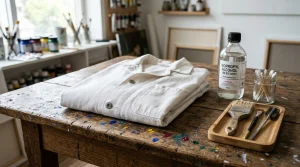
Never paint on brand-new, unwashed fabric. Manufacturers coat new textiles in chemical sizing agents and starches that prevent paint pigments from bonding to the raw cotton fibers. Wash the garment in hot water with standard detergent (no fabric softeners or dryer sheets, which leave a silicone coating) and dry thoroughly. Iron out all wrinkles before beginning.
Step 2: Prepare Your Painting Station
Insert a smooth piece of rigid cardboard or plastic sheeting inside the shirt or tote bag. Fasten the fabric tightly around the board using binder clips or masking tape. This creates a flat, steady painting canvas and ensures paint cannot soak through to the back layer of the garment.
Step 3: Thin Your Acrylic Paint with Water (The 80/20 Rule)
Straight out of the tube, heavy-body acrylic paint is too thick to penetrate the weave and will form a rigid shell on top of the fabric that easily cracks. Mix your acrylic paint with approximately 15% to 20% water on your palette until it reaches the consistency of heavy cream or melted ice cream. Warning: Do not exceed 25-30% water, as excessive dilution breaks the acrylic polymer emulsion binders and leads to pigment washout during laundry.
Step 4: Apply Paint in Thin, Workable Layers
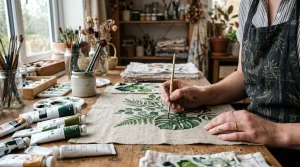
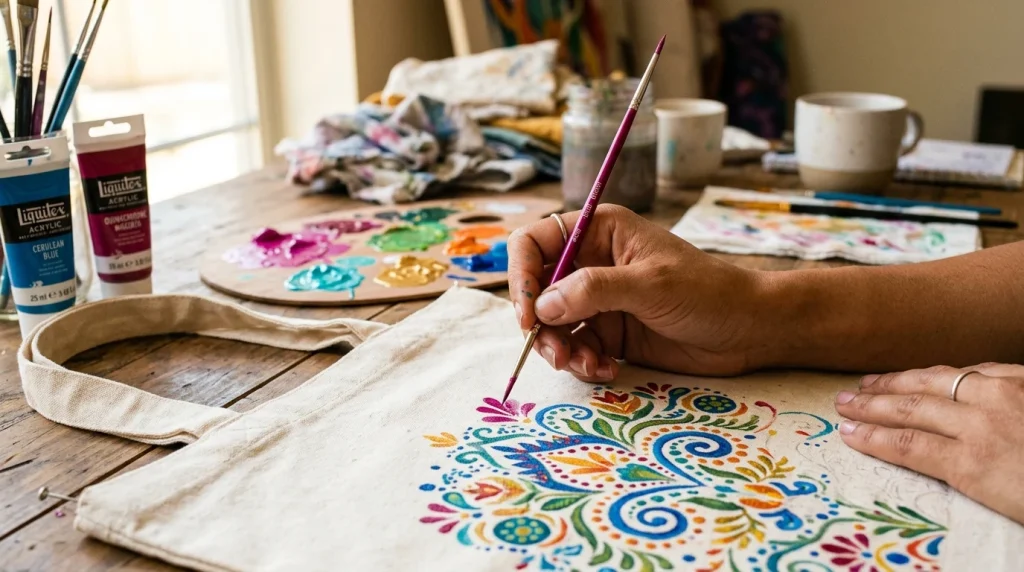
Use a firm synthetic brush to work the thinned acrylic into the fabric weave. Apply paint in multiple thin coats rather than one heavy, opaque layer. If you are painting on dark denim or black fabric, lay down a thin white basecoat first, allow it to dry completely, and then apply your vibrant colors over the white undercoat.
Step 5: Full Air Drying (24 to 48 Hours)
Let the painted garment air dry flat in a dust-free room for at least 24 hours (48 hours is ideal for thick designs). Acrylic dry-to-the-touch time is deceptive; the polymer chains need time to fully cross-link before any heat is applied.
Step 6: The Crucial Step — Thermal Heat Setting
Heat setting is the non-negotiable step that makes acrylic paint permanent on fabric without medium:
- Ensure the paint is completely dry.
- Place a sheet of non-stick parchment paper or a clean cotton tea towel directly over the painted artwork.
- Set your household iron to medium-high heat (cotton/linen setting, strictly NO STEAM).
- Press the iron firmly over the design, moving continuously in small circular motions for 3 to 5 minutes across the entire painted area.
- Turn the garment inside out and iron the reverse side for an additional 2 minutes.
Garment Care & Washing Instructions
To ensure your custom painted clothing lasts for years without fading or peeling:
- Wait at least 5 to 7 days after heat setting before the first wash.
- Always turn the garment inside out before laundering.
- Wash in cold water on the gentle or delicate cycle using a mild, non-bleach detergent.
- Line dry or hang dry; avoid high-heat commercial tumble dryers.
Frequently Asked Questions
Will acrylic paint wash out of clothes if I don’t use fabric medium?
No. If the fabric was pre-washed, the paint was worked into the fibers, and the design was properly heat-set with an iron for 3-5 minutes, acrylic paint becomes permanent and waterproof. It will not wash out in normal laundry.
Can I paint stretchy fabrics like leggings or spandex without medium?
Painting highly elastic or synthetic fabrics (like spandex, rayon, or polyester blends) without medium is not recommended because standard acrylic cannot stretch beyond 10-15% without micro-cracking. Direct acrylic without medium works best on non-stretch or low-stretch woven natural fabrics like cotton, denim, canvas, and linen.
What can I use instead of fabric medium if I want extra softness?
If you do not have commercial fabric medium, thinning with a 80/20 paint-to-water ratio is the best method. Some crafters use a few drops of vegetable glycerin or clear textile conditioner, but pure water combined with thorough heat setting remains the most reliable, tested alternative.
Get our latest guides, news, and insights highlighted in your Google Search & AI Overviews.