
Have you ever wondered how to maximize the effectiveness of your acrylic markers? Understanding how acrylic markers interact with mediums like retarder is essential for artists looking to extend their working time and enhance their creations. This guide will delve into whether acrylic markers work with retarder, equipping you with the knowledge to make informed decisions in your artistic process. Whether you are a seasoned artist or a beginner, this information can help you achieve smoother, more blended results and ultimately enrich your artistry. Stay tuned as we explore the fascinating relationship between acrylic markers and retarders, and discover tips to elevate your artwork to the next level.
Understanding Acrylic Markers and Their Properties

Acrylic markers have revolutionized the way artists create, blending the precision of felt-tip technology with vibrant, water-based acrylic paints. What sets these markers apart is their versatility, allowing for seamless application on various surfaces like paper, wood, fabric, and even ceramics. Their fast-drying properties make them ideal for quick sketches and detailed artwork alike, while their opaque formulation ensures bold colors that stand out. These attributes not only cater to professionals but also invite beginners to dive into the world of acrylic art with minimal mess and skill development.
One of the most notable features of acrylic markers is their ability to create both fine lines and broad strokes, depending on the nib type and application technique. Many markers come with interchangeable tips, further enhancing their adaptability for different styles and techniques. Additionally, the resistance of acrylic paint to fading when exposed to light means that artwork can maintain its vibrancy over time, making them excellent for both display and practice.
Acrylic markers are generally non-toxic and water-soluble, which allows for easy clean-up and use in classroom settings. However, artists must be mindful of the drying time; once dry, the paint becomes permanent, which is a significant advantage for finished works but can be a challenge for ongoing projects. This is where the use of retarders can be beneficial, extending the drying time and allowing for more intricate blending techniques.
In conclusion, acrylic markers serve as a powerful tool for creativity, combining the ease of use typical of markers with the rich, lasting effect of acrylic paints. Whether transitioning from traditional painting methods or seeking a new medium for expression, understanding their unique properties can greatly enhance your artistic endeavors.
What is a Retarder? Benefits and Uses in Art

The use of a retarder in acrylic art supplies is a game-changer for artists seeking to enhance their creative processes. Essentially, a retarder is an additive that slows down the drying time of acrylic paints, providing artists with the luxury of extended working time. For those accustomed to the rapid-drying nature of acrylics, this can transform the approach to blending and detailing, enabling more intricate and layered techniques without the pressure of racing against the clock.
Benefits of Using Retarders
Incorporating a retarder into your acrylic marker workflow offers several key benefits:
- Extended Manipulation Time: With a retarder, you can work with your paint longer, smoothing colors and achieving gradients that are difficult to accomplish in a rush.
- Improved Blending: It allows for seamless blending of colors on the canvas or paper, making it easier to achieve the desired effects without harsh lines.
- Reduced Color Shift: Since acrylics dry quickly, they can sometimes darken as they cure. A retarder helps maintain the original color vibrancy.
- Flexibility in Techniques: Artists can use various techniques, such as glazing and scumbling, more effectively when they have the time to manipulate the paint.
Retarders are particularly useful for detailed work, such as fine line art or intricate designs, where precision is crucial and every stroke matters. By allowing more time for adjustment, artists can ensure that their visions are accurately realized on the canvas.
Practical Uses in Art
Artists can incorporate retarders in several ways:
- Mixing with Acrylic Markers: Simply dilute your acrylic marker color with a few drops of retarder to achieve a more manageable consistency. This mixing allows for easier application and gives artists a chance to find their preferred texture.
- Layering Techniques: Apply layers of color that require blotting or blending without fear of quick drying. This technique is particularly effective in creating depth in landscape or portrait work.
- Experimentation: For those exploring new styles or techniques, retarders provide a safety net, allowing experimentation with color mixing and application methods.
In conclusion, understanding and utilizing a retarder can significantly enhance the acrylic painting experience, making it a worthy tool for both beginners and seasoned artists alike. With the ability to stretch drying times, artists are empowered to refine their techniques, achieve greater detail, and enjoy the creative process without the stress of hurried application.
How Do Acrylic Markers Interact with Retarders?
Incorporating a retarder into your acrylic marker usage opens up a world of possibilities for artists, significantly transforming how they can manipulate the paint. Acrylic markers, known for their quick-drying properties, can become challenging when blending or layering colors. By adding a retarder, you can slow the drying process, allowing for more time to work on achieving smooth gradients and intricate details. This interaction enables artists to explore techniques that may have seemed difficult due to the fast-drying nature of acrylics.
Additionally, the retarder influences the overall consistency of the acrylic paint. When mixed with acrylic markers, it creates a more workable solution that can enhance the flow and application of the paint on various surfaces. The result is less risk of creating harsh lines, allowing for a more seamless transition between shades. Artists may find that a few drops of retarder can transform their markers into tools that virtually mimic the qualities of traditional paint, thus expanding their creative range.
It’s important to note that the ratio of retarder to acrylic marker should be carefully balanced. Too much retarder may overly dilute the color intensity, while too little might not provide sufficient extended working time. Experimenting with different mixes will help you understand what works best for your style and the specific effects you aim to achieve. One common practice is to start with a small amount of retarder-about 10-20% of the total paint mix-and adjust from there based on your needs.
Ultimately, the interaction between acrylic markers and retarders not only enhances the technical aspects of your artwork but also enriches the creative experience. This combination offers artists the flexibility to push boundaries, allowing for more dynamic and expressive pieces without the usual constraints of drying times. By fully embracing this duo, you can elevate your acrylic art to new heights.
Best Practices for Using Retarder with Acrylic Markers
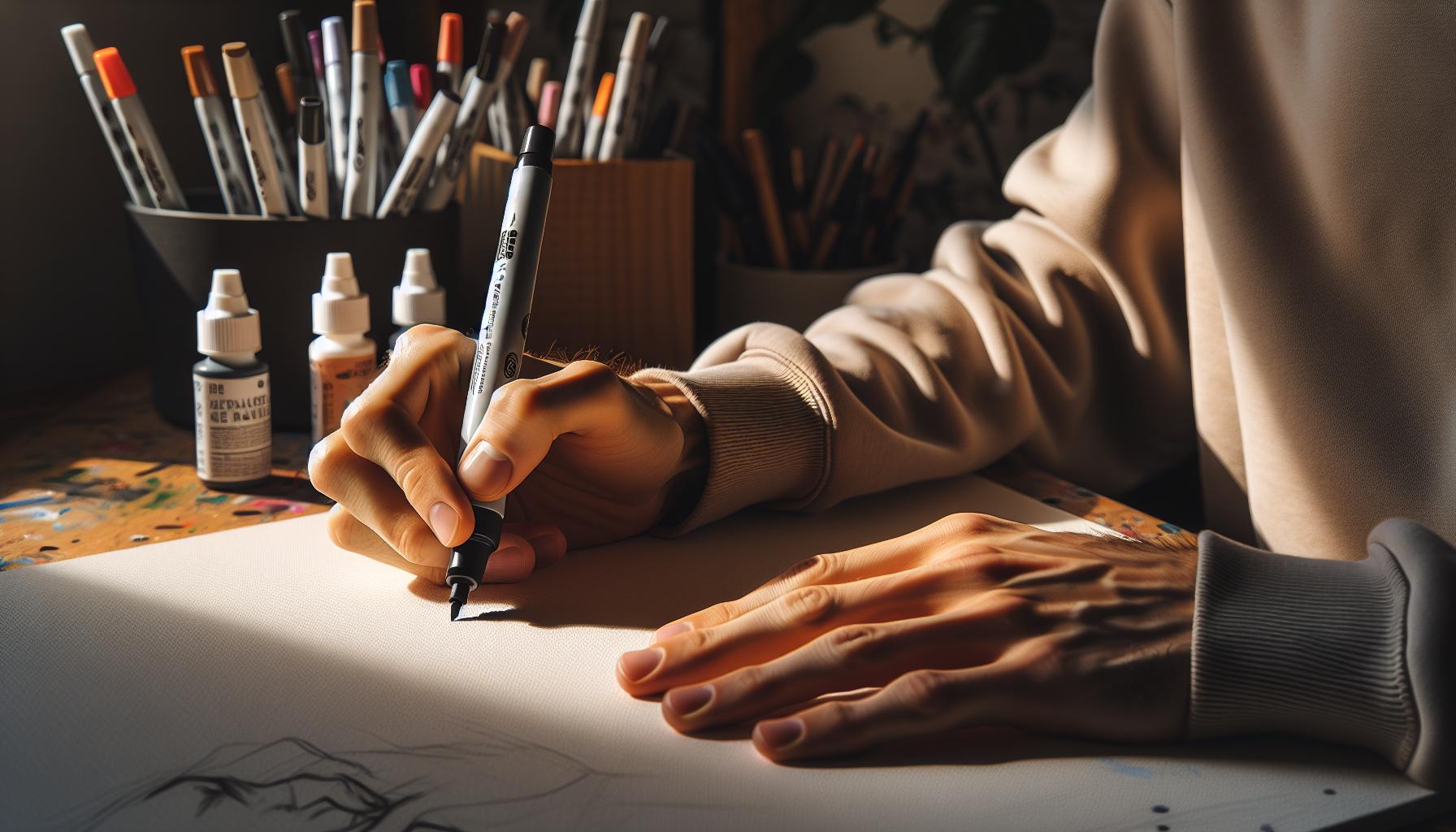
Using a retarder with acrylic markers can transform your artistic experience, offering you extended working time and enhanced blending capabilities. To make the most of this combination, consider these best practices that can elevate your artwork and help you achieve professional results.
First, always begin with a proper mixing ratio. While a common recommendation is to start with about 10-20% retarder in your mix, this can vary based on your specific needs and the markers you’re using. Gradually adjust the amount until you find a balance that maintains color saturation while providing the desired extended working time. Keep in mind that too much retarder can dilute the color vibrancy, so experimentation is key.
Another vital practice is to ensure that your working environment is optimized for using retarders. Work in a controlled climate-avoid areas that are too hot or dry, as they can accelerate the drying process despite the added retarder. A medium humidity level can help maintain the appropriate drying time for your paint mixes.
Surface Preparation
The surface you choose to paint on is equally important. For acrylic markers mixed with retarder, consider using surfaces designed for acrylic paints, like canvas boards or heavy watercolor paper, which can further enhance the marker’s flow and the effectiveness of the retarder. Additionally, ensure the surface is clean and free from dust to allow for better adhesion and smoother application.
To help maintain your markers’ longevity, clean the tips regularly and avoid leaving them uncapped for long periods, even when mixed with retarder. This keeps the ink from drying out and prevents clogs that can disrupt your painting process.
Finally, don’t shy away from practicing different techniques. For instance, try layering colors or creating gradients using the retarder, as it allows you to manipulate drying times effectively. Experimenting not only hones your skill set but also inspires creativity in your projects. Remember, the journey is just as crucial as the final piece, so enjoy the process and explore the potential that acrylic markers and retarders can bring to your artwork.
Techniques for Mixing Retarder with Acrylic Markers
When it comes to using retarder with acrylic markers, mastering the mixing process is essential for achieving desired effects and maximizing your creative potential. Properly combining retarder with your acrylic markers can enhance blending, provide extended working time, and prevent your artwork from drying too quickly-key benefits that can transform your artistic experience.
Start by experimenting with the mixing ratio. A good rule of thumb is to begin with a mixture of about 10-20% retarder to your acrylic paint or ink. As you work, adjust the ratio based on your specific project and working conditions. For instance, in warmer environments, you might opt for a higher percentage of retarder to counteract accelerated drying times. Always ensure that the retarder is well-integrated with the marker’s ink to maintain color vibrancy and prevent any separation.
Equipping yourself with the right tools can also elevate your mixing technique. Use a small palette or mixing tray to combine the retarder and ink thoroughly. It’s advisable to mix only as much as you need to prevent waste, as the mixture may not perform the same after prolonged exposure to air. When mixing, aim for a consistency that feels smooth and flows easily; this will facilitate better application on your chosen surface.
Environment Matters
Your working environment plays a crucial role in how your mixed paint interacts. Ideally, conduct your mixing and painting in a location with controlled temperature and humidity. This not only helps prolong the working time with retarder but also allows for more predictable drying-essential in executing techniques like layering or glazing. If you’re working in a particularly dry space, consider running a humidifier to help maintain optimal conditions.
Lastly, always test your mixture on a scrap piece of paper or canvas before committing it to your primary artwork. This practice allows you to see how the colors behave with the retarder and helps you determine the best application techniques for your project. By taking these steps, you can effectively leverage retarder to ensure your acrylic markers perform at their very best, opening up a world of artistic possibilities.
Comparing Retarders: Gel vs. Liquid Options
When it comes to incorporating retarders into your acrylic painting process, choosing between gel and liquid options can significantly impact your creative outcomes. Both types of retarders serve the same primary purpose: extending the drying time of acrylics. However, the way they interact with your medium and the effects they produce can differ substantially.
Gel retarders tend to have a thicker consistency, making them particularly useful when working with heavy-bodied paints. They provide a creamy texture that allows for better blending and manipulation of colors without significantly altering the paint’s viscosity. This property makes gel retarders ideal for techniques like impasto or when applying thick layers. The slower drying time can facilitate smoother transitions and soften edges, making them excellent for detailed work or when layering colors.
On the other hand, liquid retarders are more versatile and easier to mix with acrylic inks or fluid paints. Their thinner consistency means they integrate seamlessly, allowing for a more uniform texture and flow. As a result, liquid retarders are beneficial for broader applications, like washes and glazing techniques. They deliver consistent outcomes without compromising the vibrancy of the paint, which is essential for artists seeking to maintain color intensity in their work.
Both options have their unique strengths, and the choice largely depends on the specific techniques and effects you wish to achieve. If you’re unsure which to use, consider experimenting with both in small projects to understand how each type performs under various conditions. Ultimately, both gel and liquid retarders can enhance your acrylic markers’ performance, granting you the extended working time necessary to explore your artistic vision creatively.
Achieving Desired Effects with Retarders in Acrylic Painting
To fully harness the creative potential of acrylic markers, understanding how to incorporate retarders can make a significant difference in your artwork. By extending the drying time of acrylic paint, retarders allow artists to blend colors more effectively and achieve desired textures without the pressure of quickly drying paint. This can be especially beneficial in techniques that require layering or fine detail work, where creating smooth transitions is essential.
One effective way to achieve desired effects is by adjusting the amount of retarder used based on the specific technique you’re employing. For instance, when working with a wet-on-wet technique, where colors are blended directly on the canvas, a higher concentration of retarder can keep the paint workable for longer, allowing for more fluid movements and subtle gradations. Conversely, if you are executing a detailed painting or line work, a smaller amount can help maintain the paint’s viscosity while still providing extra working time.
Additionally, experimenting with different ratios of retarder can lead to unexpected and exciting results. For example, combining a small amount of liquid retarder with acrylic markers could yield a luscious glaze effect that enhances depth in your artwork. When mixing, start with a basic ratio (like 1 part retarder to 3 parts paint) and adjust according to your personal preferences and the demands of your project. Remember that the goal is to maintain the vibrancy of the colors while providing yourself the flexibility to refine your work.
Exploring these aspects will not only enhance your technical skills but also deepen your understanding of how to control the medium effectively, enabling a greater expression of your artistic vision. Whether you’re a beginner or an experienced artist, utilizing retarders in conjunction with acrylic markers can open up a world of possibilities in your artistic endeavors.
Common Mistakes to Avoid When Using Retarder
In the journey of mastering acrylic markers and retarders, avoiding common pitfalls can significantly enhance your artistic outcomes. One prevalent mistake many artists make is overusing retarder, thinking that more will always yield better blending time. However, excessive retarder can lead to a soupy consistency that compromises the integrity of your colors and application. Instead, start with a conservative amount and gradually increase as needed to maintain the right balance of workability and thickness in your paint.
Another frequent issue is neglecting to test the combination on a scrap surface before applying it to your final piece. Different brands of acrylic markers and retarders can react uniquely, causing unexpected results. Conduct small tests for both mixing ratios and layering techniques to observe how your chosen retarder influences drying times and texture. This step can save you from potential frustration during the actual creative process.
Additionally, not cleaning your tools after using retarders can lead to contamination of your markers or brushes with unwanted residues that may affect subsequent projects. Always make it a practice to thoroughly clean your tools after use, preventing any unwanted chemical interactions in future artworks.
Lastly, be mindful of your working environment. Humidity and temperature can significantly affect how retarder performs. If you’re in a particularly humid area, it might be wise to use less retarder, as the increased moisture can already slow down drying times. Adjust your approach based on your workspace to ensure optimal results. By being aware of these common mistakes, you’ll find greater success and satisfaction in your artistic endeavors with acrylic markers and retarders.
Tips for Storing Acrylic Markers with Retarders
To maintain the longevity and functionality of your acrylic markers, especially when combined with a retarder, proper storage is crucial. These markers can dry out or become unusable if not stored correctly, and the same can be said for retarders, which can separate or spoil if exposed to air, heat, or moisture. Here are some essential tips to ensure your acrylic marking supplies remain in prime condition.
Begin by storing your markers horizontally, as this helps to distribute the ink evenly throughout the nib and prevents it from settling. If your markers come with caps, always make sure they are tightly secured to prevent air from entering. Acrylic markers should be kept away from direct sunlight or any heat source, which could accelerate drying and negatively impact the paint’s consistency.
In terms of retarders, it’s best to store them in a cool, dry place, ideally in their original container with the lid firmly closed to avoid contamination. If you are using a liquid retarder, consider transferring it to a smaller, opaque bottle to protect it from light exposure. For gel retarders, ensure the container is airtight. Label your containers clearly to differentiate between types of retarders and other mediums, as this will save time and potential errors during your creative process.
Finally, consider creating a designated storage bin for your acrylic markers and retarders. This bin should be organized and easily accessible, allowing you to find what you need without rummaging through other supplies. Including silica gel packets in the storage container can help absorb any excess moisture, further protecting your materials from premature drying or degradation. By following these storage tips, you’ll ensure that your acrylic markers and retarders remain ready for use, enhancing your artistic journey.
Exploring Alternative Products for Extended Paint Time
When working with acrylic markers, artists often seek ways to extend their paint time and improve blending capabilities. While retarders are a common solution, several alternative products can enhance your painting experience and create stunning results. These alternatives can be especially handy in warm environments or for artists looking to experiment with different textures and effects.
One effective option is acrylic medium, which comes in various forms such as gloss, matte, and gel. These mediums not only extend drying times but also add unique visual characteristics to your work. For instance, using a gel medium can provide a thicker texture that enhances the dimensional aspect of your strokes. Simply mix the medium with your acrylic paint before applying it with markers to achieve a more dynamic finish.
Another worthwhile alternative is airbrush medium. While primarily used in airbrush techniques, this product is great for thinning acrylic paint and can be used with markers for smoother application and evaporation control. It allows for a more liquid consistency without compromising the vibrant colors, making it easier to work in layers or apply fine details.
Lastly, consider incorporating a slow-drying retarder that specifically states compatibility with acrylic markers. These products are designed to slow down the drying time without affecting the paint’s adhesion, making them perfect for prolonged blending and detailed work. When choosing a retarder, always check manufacturer recommendations for compatibility with different types of acrylic paints.
Incorporating these alternatives into your practice not only enhances your creative process but also gives you greater control over drying times and finish quality. Whether opting for acrylic mediums, airbrush mediums, or specialized retarders, experimenting with these options can lead to exciting new artistic discoveries.
Real Artist Experiences: Testimonials and Tips
Many artists have found that the right combination of acrylic markers and retarders can vastly improve their creative process, allowing for more intricate details and smoother blends. One artist, Jenna M., shared her experience with using a slow-drying retarder specifically designed for acrylic paints. She emphasized how the retarder extended her working time significantly, which was particularly beneficial during her detailed watercolor-style projects. “Sometimes I need to step back and analyze my work. The retarder gives me the freedom to do just that without the pressure of rushing,” she noted.
Another painter, Marco L., prefers a gel retarder for his acrylic markers. He discovered that the gel helps maintain the vibrancy of his colors while providing the additional working time he needs. “Mixing a little gel retarder with my markers has changed my approach to layering. I can build depth with colors without worrying about the paint drying too quickly,” he explained. He recommends experimenting with different brands to find the one that best suits individual styles, mentioning that some brands blend more seamlessly than others.
For newcomers to using retarders with acrylic markers, artist and teacher, Sarah E., suggests starting with small amounts. “I learned the hard way-too much retarder can alter the flow of the markers unexpectedly. A few drops go a long way,” she stated, advising artists to gradually add retarder to their paint mixtures. She also recommends testing mixtures on scrap paper before applying them to a final piece. This way, artists can effectively gauge the drying time and blending capabilities.
In summary, the shared experiences of artists highlight the potential of retarders to enhance the functionality of acrylic markers. By carefully choosing the right type and experimenting with different mixtures, artists can unlock new creative possibilities and refine their techniques.
Creative Projects to Try with Retarders and Acrylic Markers
Exploring the versatility of acrylic markers combined with retarders opens up a world of creative possibilities that every artist should consider. One engaging project to try is creating layered paintings, which often benefit from extended drying times. By mixing a retarder into your acrylic markers, you can develop vibrant, transparent layers that allow the underpainting to subtly show through. This technique works particularly well for landscapes or abstract designs, where depth and texture enhance the overall composition.
Another exciting idea is to experiment with mixed media art. Incorporating different materials such as collage or textured elements can add a unique dimension to your piece. Use the retarder to slow down the drying process, giving you time to adjust colors and blends as you work with various surfaces. For instance, layering acrylic marker artwork over watercolor or ink can yield stunning results, and the retarder will help maintain the integrity and vibrancy of your colors as they interact.
For artists interested in functional art, customizing everyday items like tote bags, shoes, or even furniture is a popular trend. Apply the retarder to your acrylic markers to achieve detailed patterns or stunning illustrations on fabric or wood surfaces. This approach not only showcases your creativity but also builds a brand presence if you decide to sell your customized items. Make sure to conduct a test on a small area first to see how the retarder affects the adhesion and finish of the marker on different materials.
Lastly, consider setting up collaborative art sessions or workshops that focus on using retarders with acrylic markers. Encourage participants to explore various techniques together, such as blending colors or creating unique textures. This communal experience can foster creativity, inspire new ideas, and expand everyone’s skill set. Providing a space for sharing tips and techniques allows artists of all levels to learn from each other while enjoying the transformative power of incorporating retarders into their art practice.
Q&A
Q: Can you use acrylic markers with a retarder?
A: Yes, you can use acrylic markers with a retarder to extend drying time, allowing for easier blending and manipulation. This combination can enhance your painting techniques and create more seamless transitions between colors. Refer to the section on “How Do Acrylic Markers Interact with Retarders?” for detailed insights.
Q: What is the best way to mix retarder with acrylic markers?
A: The best way to mix retarder with acrylic markers is to add a small amount of retarder directly to the ink flow while painting. Start with a ratio of 1:10 (retarder to ink) and adjust as needed. This method ensures smoother blending and reduces the risk of compromising the marker’s pigmentation. Check “Techniques for Mixing Retarder with Acrylic Markers” for further guidance.
Q: Why would an artist choose to use a retarder with acrylic markers?
A: Artists choose to use a retarder with acrylic markers to slow down the drying process, allowing more time for blending and layering colors. This is especially useful for detailed work or for achieving gradients. Explore more in “Benefits and Uses in Art” to understand its advantages.
Q: Are there any mistakes to avoid when using retarder with acrylic markers?
A: Common mistakes include adding too much retarder, which can thin the marker’s consistency and affect color vibrancy. Additionally, neglecting to test the mix before application may lead to unsatisfactory results. For a comprehensive list, see “Common Mistakes to Avoid When Using Retarder.”
Q: How does the type of retarder affect the use with acrylic markers?
A: The type of retarder-gel or liquid-can significantly affect its interaction with acrylic markers. Gel retarders tend to create a thicker consistency, whereas liquid retarders maintain fluidity, impacting blending and drying times. Refer to “Comparing Retarders: Gel vs. Liquid Options” for more details.
Q: What projects can benefit from using acrylic markers with retarder?
A: Projects that require extended blending time, such as detailed illustrations or complex layering techniques, benefit greatly from using acrylic markers with retarder. This combination allows for more creativity and precision in artistic execution. Check out “Creative Projects to Try with Retarders and Acrylic Markers” for ideas.
Q: How do you store acrylic markers when using retarder?
A: Store acrylic markers horizontally in a cool, dry place to prevent the ink from separating and ensure longevity. If using retarder, make sure the caps are tightly sealed to avoid drying out. For best results, refer to “Tips for Storing Acrylic Markers with Retarders.”
Q: Can retarder be mixed with other mediums besides acrylic markers?
A: Yes, retarder can be mixed with other acrylic-based mediums, such as paints and gels, to extend drying times. However, always test compatibility to ensure desired effects. Expand your knowledge in the “Exploring Alternative Products for Extended Paint Time” section for more options.
The Conclusion
As you explore the fascinating world of acrylic markers and retarders, remember that experimentation is key to mastering your creative process. By understanding how these tools interact, you can elevate your artwork and achieve stunning effects. If you still have questions or need extra tips, don’t hesitate to check out our guides on Acrylic Painting Techniques and Choosing the Right Acrylic Supplies to further refine your skills.
Don’t miss out on our exclusive newsletter, where you can receive the latest updates and expert advice directly in your inbox. Join our community of artists passionate about making the most of acrylic mediums! Your journey doesn’t have to end here-explore more articles that inspire your creativity. The possibilities are endless, so let’s keep the conversation going! Dive deeper into acrylic techniques today and bring your artistic vision to life!