Which Chemicals Damage Jewellery Finishes: Avoid These Mistakes
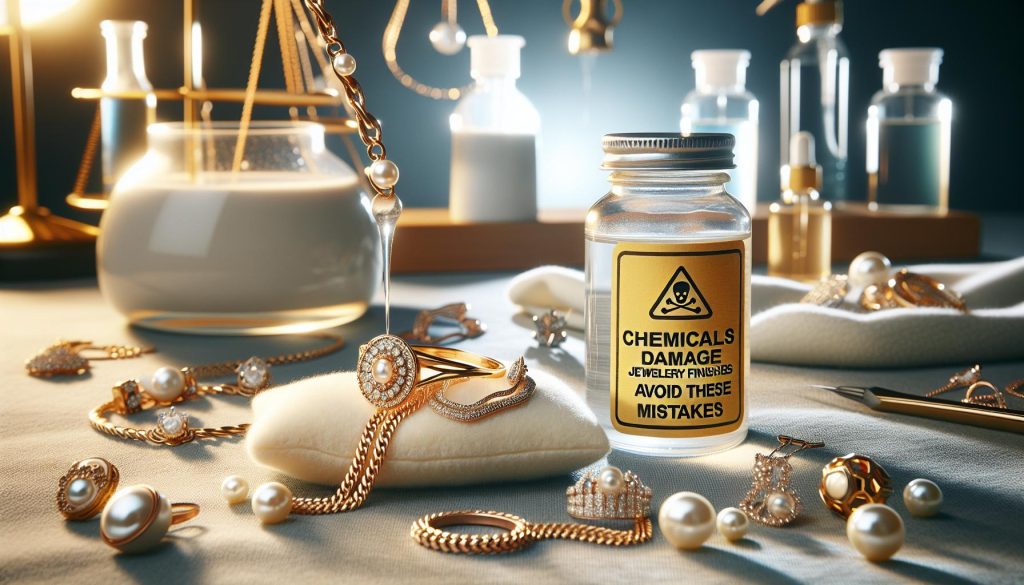
Discover which chemicals damage jewellery finishes and learn how to protect your precious pieces. Avoid costly mistakes and keep your treasures shining!

synthesizes electrochemical oxidation mechanics, barrier coating chemistry, atmospheric gas filtration, and moisture mitigation protocols to permanently safeguard silver, copper, brass, and karat gold from dulling tarnish.
Examining trace atmospheric hydrogen sulfide (H2S), moisture catalysts, and silver sulfide (Ag2S) lattice formation.
Evaluating 316L chromium oxide passivation films, tap water chlorine exposure, and waterproof jewelry longevity.
Anti-tarnish papers, microcrystalline wax sealants, rhodium barriers, and humidity-controlled storage regimens.
Tarnish on jewelry is an electrochemical surface corrosion phenomenon rather than simple atmospheric rusting. Silver and base copper atoms undergo spontaneous oxidation when exposed to airborne sulfurous pollutants—most notably hydrogen sulfide (H2S), sulfur dioxide (SO2), and carbonyl sulfide (OCS). These gases react with surface metal ions to precipitate an insoluble, light-scattering crystalline film: silver sulfide (Ag2S) on silver and copper oxide / copper carbonate (patina) on brass and bronze.
Preventing tarnish relies upon either sacrificial absorption or protective passivation barriers. Storing metals inside sealed enclosures containing copper-doped scavengers (Intercept Technology) traps airborne sulfur before it can strike jewelry. For wearable protection, manufacturers apply microscopic barrier layers: electrolytic rhodium plating provides an inert 0.5-micron shield, while electro-ceramic e-coating (nanotech silica-acrylic hybrid) seals the metal pores completely, rendering the piece virtually immune to perspiration, tap water, and ambient humidity.
| Metal / Alloy | Tarnish Susceptibility | Primary Chemical Catalyst | Best Prevention Strategy |
|---|---|---|---|
| 925 Sterling Silver | High (Turns yellow, then black) | Airborne hydrogen sulfide + moisture | Anti-tarnish cloth, silica gel, rhodium plating |
| Solid 14k/18k Yellow Gold | Extremely Low (Noble metal) | Alloyed copper/silver reacting to chlorine | Keep away from bleach, hot tubs & pools |
| 316L Stainless Steel | Zero (Completely impervious) | Harsh acids / concentrated bleach only | Wash with warm water; zero maintenance needed |
| Brass & Costume Copper | Very High (Rapid green/brown tarnish) | Skin sweat acidity (lactic acid) + air | Jeweler polymer lacquer or microcrystalline wax |
Store your clean silver pieces in individual airtight ziplock bags with an anti-tarnish strip and a silica gel packet. The ziplock blocks sulfur-laden airflow, the silica gel eliminates moisture catalysts, and the anti-tarnish strip absorbs any stray sulfur molecules.
Yes, for sterling silver! The natural friction of wearing your silver jewelry against your skin and clothing continuously buffs away microscopic tarnish crystals before they can bond into dark visible silver sulfide. Just remember to wipe pieces with a microfiber cloth after taking them off.
Yes. A simple stick of plain white blackboard chalk is composed of calcium carbonate, which acts as a natural humidity sponge. Placing a piece of chalk inside your jewelry box helps keep the interior microclimate dry, significantly slowing down the oxidation reaction that causes tarnish.
Authored and curated by the Jewelry Care & Material Craftsmanship Desk at MissJ.eu. All recommendations, metallurgical benchmarks, and cleaning protocols are derived from established jewelry industry benchmarks, standard metal assay criteria, and professional studio lapidary practices.
Advisory Notice: Material properties and gemstone sensitivities vary by alloy grade, plating thickness, and vintage age. Always conduct a spot test on an inconspicuous section before applying chemical solvents or ultrasonic treatments to heirloom jewelry.
Discover which chemicals damage jewellery finishes and learn how to protect your precious pieces. Avoid costly mistakes and keep your treasures shining!